

Putin repeatedly humiliated Trump and his envoys, says Finnish MEP Pekka Toveri
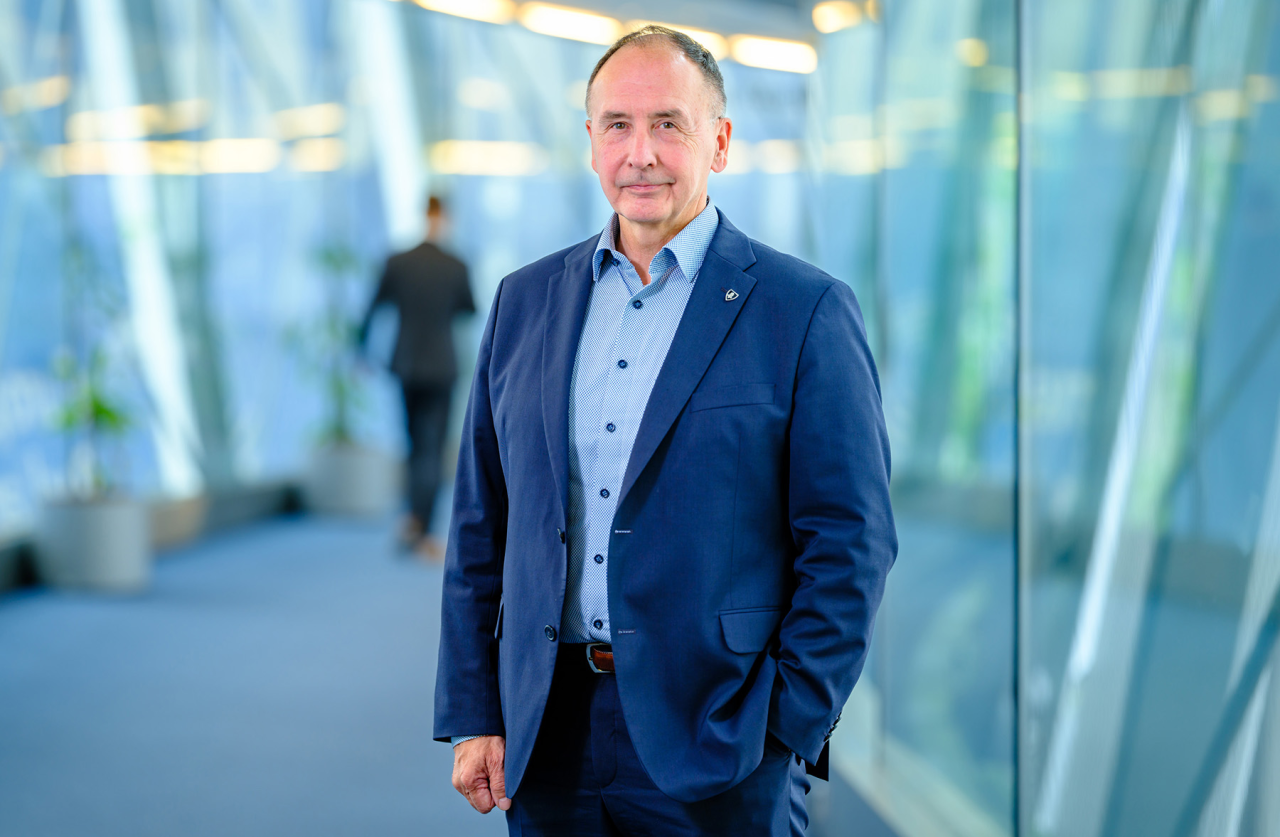
General Pekka Toveri, Member of the European Parliament from Finland, speaks with NV journalist Natalia Rop about Donald Trump’s peace attempts, the tools the EU still hasn’t used against the Kremlin, and why European peacekeepers must have the authority to use force against Russia if needed.
— During his election campaign, Donald Trump promised to end the Russian-Ukrainian war quickly. But as we see now, it is not happening. How would you assess his peace efforts over the past three months?
— Well, first of all, I think that nobody else—maybe he himself, but nobody else—believed there was a chance for fast peace in a case like this. And especially now, when we look at how the process has gone, it’s very weird, so to say. Very little has been achieved by the U.S. team. President Putin has humiliated both President Trump's envoys and Trump himself several times. And again, we don't have any tangible results so far. Now he's threatening to pull out because there haven’t been enough results and is blaming Ukraine for that—which is, again, quite an interesting way of handling negotiations. It shows that his team is really unprofessional in this case and doesn't understand how Russia operates.
— Why do you think Trump expects more concessions from Ukraine? Is there any strategy in this?
— Well, that’s a good question. I think it’s mainly because of Mr. Trump himself. He seems to admire strong leaders—unfortunately, dictators—and seems to align himself more toward Putin than toward President Zelenskyy, who is a democratically elected, popular leader.
And, of course, there’s the history—the cases during his previous term and before that, when he demanded Ukraine produce evidence about President Biden’s son’s business dealings and so on. And Ukraine, of course, refused to do that because you are a legal state that follows legal procedures. All of these things, I think, play a role here.
— If the U.S. decides to withdraw from the peace process, what will Europe do?
— It has been very clearly stated by the EU—from both the Commission and the Parliament—that if the United States pulls out, we will fill the void. We will continue supporting Ukraine and compensate for the gap left by the U.S. withdrawal so that Ukraine can continue to fight until it's in a position to start negotiating on its own terms.
— Do you believe that the EU has enough strength and resources to help Ukraine without the U.S.?
— This is not a question of money. It's a question of political will. The support Ukraine needs amounts to about 0.25% of EU countries' gross national product—which is less than what we give in development aid to third-world countries. It's not about money. Yes, the biggest challenge is our industry, which doesn't yet provide enough material, but we could give the money to Ukraine. Ukraine has increased its industrial capacity 35 times during the war, as I understand it. So we could easily finance and continue financing Ukraine so that it can build the systems, weapons, and ammunition it needs.
— What could a European peacekeeping mission in Ukraine look like?
— I think there have been discussions, and oddly enough, many of them have focused on military forces—how many troops we could send to Ukraine. There have been claims that 25,000 is too many, which is interesting, considering that European NATO has around 1.6 million professional soldiers. The idea that we can’t find 25,000 sounds odd.
Nevertheless, I think the best deterrent would be the Ukrainian army equipped with European weaponry and systems, along with Western European air power. We have three times more fighter jets than Russia—more modern aircraft and better-trained pilots. So we could have a small contingent of ground forces, maybe a few thousand, but the key would be creating the capability to use full Western air power to support the Ukrainian army on the front lines if needed. That would be enough deterrence. But, of course, European forces should have a clear mandate to use force against Russia if it breaks a peace agreement—and they will. I'm sure they would break it.
— Why do you think this narrative about a lack of soldiers is emerging? Are EU leaders afraid to send them?
— I think one problem is that the armies, especially in Europe, are too small. The Brits can barely field a division. The same goes for France and Germany—and those are our biggest powers. Other mid-sized European countries can barely muster one brigade, so there aren’t many forces available. I think they are all looking into increasing their armed forces. But at the same time, sending troops to Ukraine is a challenge. It’s a challenge they could manage if they really wanted to.
I also think there’s a fear of losses. European countries have seen how bloody the war in Ukraine is. They fear for their armed forces, which are not trained for this kind of war, especially with the widespread use of drones. They are afraid of casualties. That’s why I say we should rely more on air power. The risk of mass casualties among Western forces would be smaller, making it easier for politicians to support the deployment.
— Considering the situation on the front line, and also all the leverage and resources Russia has, do you believe that Putin is interested in ending the war?
— I don't believe he wants peace right now. We’ve seen how he’s behaved all along. I think the main reason is that Putin believes he can win. He believes he's on a winning streak. He believes Trump will help him secure peace on his own terms. That’s why he’s not willing to back down now. But I think he’s completely wrong. It’s a typical problem in dictatorships—nobody wants to give the boss bad news. So he may not really understand the state of the Russian armed forces or the Russian economy.
— In that case, is there anything that can stop Putin? And what would that be?
— The best way to hit Putin is by hitting the Russian economy. And the EU could do a lot. There are plenty of signs that Russia’s economy is overheating and close to collapse in some sectors. The European Union has finally adopted a plan to fully eliminate Russian gas, oil, and uranium. Accelerating that process would be a major economic blow to Russia.
Plus, there are many sanctions we haven’t used yet—against the shadow fleet, or third countries like China that support Russia economically. If we use the tools we already have, we could crush the Russian economy to the point that it can’t continue the war.
— Then why isn’t Europe using those tools now?
— Exactly. That’s my question, too. I think there’s fear—both about how Russia would react and about how it would affect European economies. With a possible trade war with the U.S. looming, there’s a lot of nervousness. Some political leaders are afraid that stronger actions would cause domestic problems for them.
— Could they also be afraid of nuclear war?
— That’s the card Putin keeps playing. He’s waved the nuclear threat many times. But that’s not a position of strength—it’s a sign of weakness. If you can't win against Ukraine with conventional forces, and you're afraid of the West's support, then you try to scare people with nuclear talk.
I don’t believe the Russian nuclear threat is a significant or imminent danger.
— How many more years can Russia continue this war?
— In the European Parliament, we have an Association Committee and a Ukrainian delegation, which I chair. We recently invited top economic experts to speak on this issue. They all agreed: Russia can maintain this level of warfare for about one year. After that, it becomes much harder.
Being a dictatorship, they could continue a bit longer by raising taxes or cutting social programs—people won’t protest. But not at the same level. So the experts estimate one to two more years, and then Russia will be in serious trouble.
— What about Ukraine? How long can it last?
— With Western support, Ukraine can last longer. But we need to make sure the support is enough. Right now, the EU gives about $40 billion annually, the U.S. around $20 billion. If the U.S. withdraws, we shouldn't just replace the $20 billion—we should double the total to $120 billion.
That amount [$60 billion] has allowed Ukraine to hold on for three years. But if we want Ukraine to win, not just survive, we need to give more. More resources would allow Ukraine to fight more effectively and end the war sooner. We don’t want more Ukrainians dying.
— But if the U.S. withdraws, can the EU replace its military capabilities?
— No, we can’t—not completely. Some systems we simply don’t have. For example, in air defense, France has a system close to the Patriot, but Europe’s defense industry can’t produce these quickly.
Still, it’s a good sign that the Trump administration has already approved two sales of American equipment to Ukraine. If that continues, we could fund Ukraine to purchase the weapons Europe can’t provide fast enough.
— Finland has stated that it will increase defense spending to 3% of GDP. But U.S. President Donald Trump says all NATO member states should raise theirs to 5%. Is that realistic?
— I don’t think so. The U.S. itself spends about 3.5% and has no plans to increase it to 5%. So how can it demand that from Europe?
There have been discussions about a counterproposal—European NATO aiming for 3.5% on defense and 1.5% for civil infrastructure resilience, which is under constant Russian sabotage and cyberattack. That would make sense, because Russia targets society as a whole, not just the military.
— Finland has launched a new support program for Ukraine that includes purchases from Finnish defense companies. Has it started producing results?
— The program is worth €660 million, which is over 10% of our annual defense budget. For Finland, that’s a substantial amount. I understand procurement has already begun.
Finland has increased artillery ammo production significantly. We have counter-UAV systems so good that even Israel has bought them. There are many materials that could help Ukraine, and several procurements are already underway—which is a good sign.
— Do you believe a third world war is possible within the next five years?
— We’re living in very volatile times. Look at how World War I started—a chain reaction from a single act of aggression. Never say never. Personally, I don’t think it’s likely, but it depends on Europe.
If we show strength and arm Ukraine so this war ends on Ukraine’s terms, Putin will understand he can’t win against Europe. But if we let him think he’s won in Ukraine, he’ll rearm and challenge the West in a few years. If that happens, nobody knows what comes next.
That’s why I tell my colleagues: if Ukraine is safe, Europe is safe. If Ukraine isn’t safe, Europe isn’t safe. And if we end up in a direct confrontation between Western Europe and Russia, no one knows how that plays out globally.
— What can the Ukrainian army do to be more combat ready?
— It’s hard to give advice to people who’ve been fighting for more than three years—since 2014, really. Ukraine’s armed forces face challenges like training new recruits, improving the command structure, and so on. But it’s hard to do that while actively fighting a war.
Ukrainian forces have shown great resilience, innovation, and initiative with limited resources. European countries should focus on supporting Ukraine with material, training, and equipment—rather than telling Ukrainians how to fight. They know how. They just need the tools.
— How do you see Ukraine’s future in NATO under a Trump presidency?
— There may be challenges. Trump has said Ukraine shouldn’t join NATO as part of a peace deal—which isn’t smart negotiation.
But many NATO members agree that Ukraine’s membership isn’t up to Putin—it’s in our interest. We should actively pursue Ukraine’s membership in both NATO and the EU as quickly as possible.
— Do you believe the Ukrainian army could offer NATO more than it receives in return?
— Yes, absolutely. When NATO expanded in the early 2000s, some new members didn’t strengthen the alliance because their defense forces were weak. Many believed NATO would protect them and forgot Article 3, which says every member is first responsible for its own defense.
Finland changed that. When we joined NATO, we made it stronger. Ukraine would too. You have the largest, most experienced army in Europe. You would significantly strengthen NATO.
— Do you believe the war will end this year?
— As they say, nothing is harder than predicting the future. But maybe by the end of this year—or early next year—there could be a ceasefire, if the U.S. and Europe increase sanctions on Russia and boost support for Ukraine’s armed forces. That would make it clear that Russia has no chance of winning militarily.
The military war may be swinging in our favor, but the information war continues.
Just as an army needs soldiers, so does a free society need its journalists to ensure that people have access to honest, trustworthy voices to understand the world around them.
For the past five years, The New Voice of Ukraine has been working tirelessly to push back against Russian narratives and defend democracy. But we cannot do it alone.
Please consider supporting us on Patreon for just $5 a month – your donation does directly to supporting journalists and ensuring that this front of the infowar says solid and defended.
Thank you.
Follow us on Twitter, Facebook and Google News
