

Gulf states establish covert oil network to bypass Strait of Hormuz
 Read NV on Google
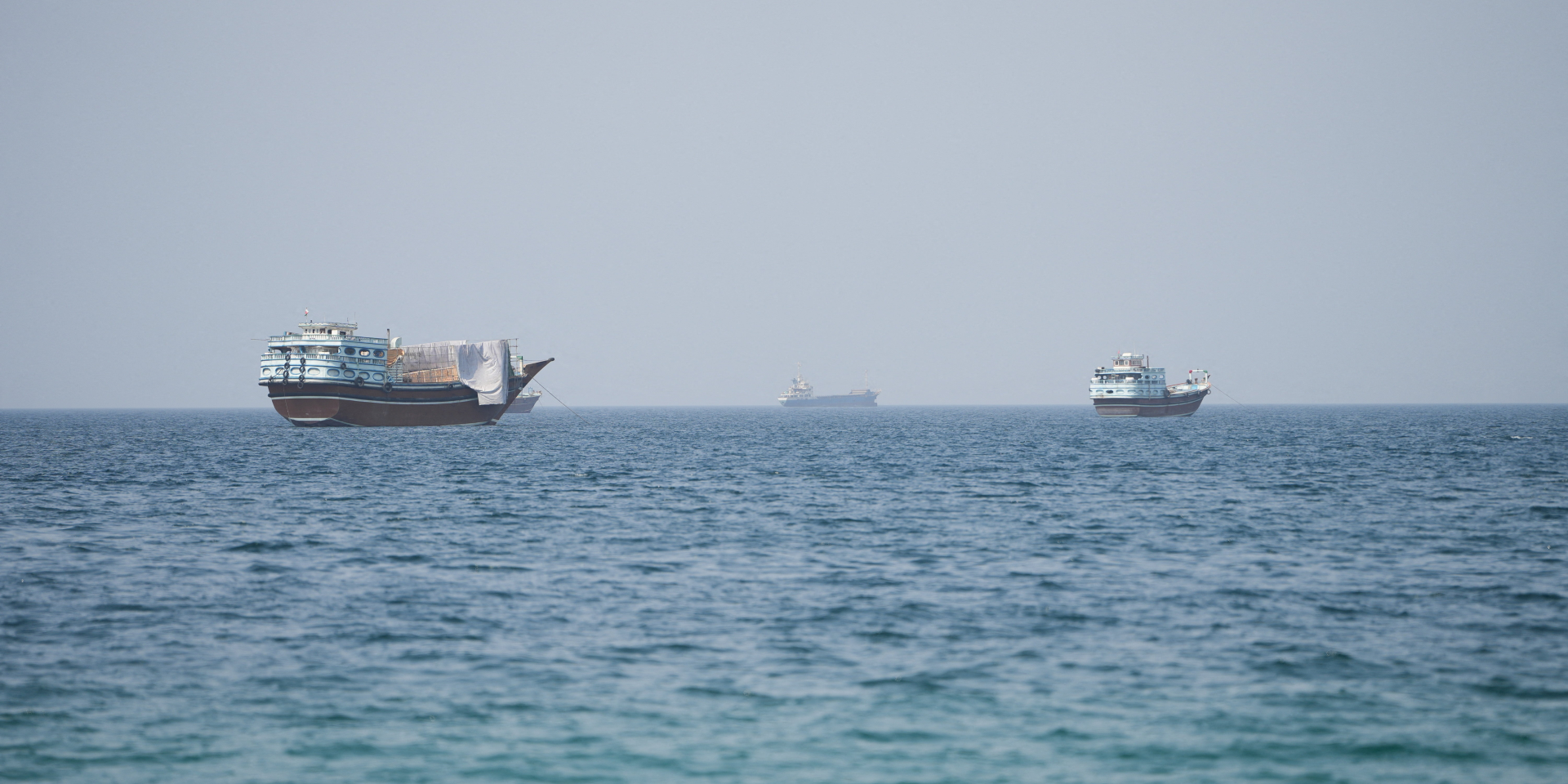
Gulf nations have established a covert network to transport oil (Photo: REUTERS/Stringer)
Gulf nations have established a covert network to transport oil overland around the Strait of Hormuz before loading it onto tankers in the Gulf of Oman, allowing exporters to secure supply routes despite regular Iranian attacks on commercial vessels, Bloomberg reported on August 16.
According to Bloomberg’s sources, the clandestine network has become a major lifeline for global markets that were bracing for a much worse supply shock when the war broke out in the Middle East.
The outlet noted, however, that the situation for producers in the region is far from normal, with ships subject to repeated attacks even though they have military protection.

“The shuttling has been ongoing for months, but tracking how much oil those 'dark' ships are moving is a challenge for traders and analysts alike because vessels are protecting themselves by giving little clue about their locations. The volumes are running higher than market estimates of 4 million barrels a day, the people said, without specifying by how much,’ Bloomberg wrote.
The UAE, Iraq, Qatar, and Kuwait are all transporting oil through this network, according to vessel-tracking data.
Data from the European Union's Sentinel-1 satellites confirmed the scale of the operation. Around 150 ships from giant oil tankers to bulk commodity carriers are floating off the coast of Oman – compared with roughly 40 in January. Many are waiting for cargo transfers from the vessels that are sailing in and out of Hormuz with their transponders turned off.
The UAE’s state-owned energy giant Adnoc has already sold about 135 million barrels of crude to buyers across the world and issued another round of sales.
Nonetheless, exporting large amounts of oil in the middle of a war is fraught with serious risk. Since the beginning of the conflict, 23 of Adnoc’s vessels have been attacked while transiting Hormuz, resulting in one fatality and 20 injuries to crew members. Sources noted that there had been more incidents involving vessels than were publicly recognized.
U.S. Defense Secretary Pete Hegseth said on August 13 that the U.S. military has enough resources to maintain a naval blockade of Iran indefinitely, adding that American ships can rotate in and out of the region as needed.
Months of American strikes, which hit Iran's leadership and inflicted significant damage on its military capabilities, including its navy, have failed to weaken Tehran's control over the Strait of Hormuz.
Trump ordered U.S. forces to halt the bombing of Iran in late July after nearly two weeks of daily strikes.
Tehran subsequently said it still controls the Strait of Hormuz and is not seeking to resume peace talks with the United States.
The Wall Street Journal, citing sources, reported on July 29 that U.S. Central Command chief Adm. Brad Cooper had prepared an option for a large-scale air campaign against Iran that could last 10 to 14 days.
The U.S. State Department on August 1 advised American citizens in the Middle East to "consider departing, or be prepared to depart should there be escalation."
The military war may be swinging in our favor, but the information war continues.
Just as an army needs soldiers, so does a free society need its journalists to ensure that people have access to honest, trustworthy voices to understand the world around them.
For the past five years, The New Voice of Ukraine has been working tirelessly to push back against Russian narratives and defend democracy. But we cannot do it alone.
Please consider supporting us on Patreon for just $5 a month – your donation does directly to supporting journalists and ensuring that this front of the infowar says solid and defended.
Thank you.
Follow us on Twitter, Facebook and Google News
