

New recordings show Szijjártó and Lavrov working to slow Ukraine’s EU path
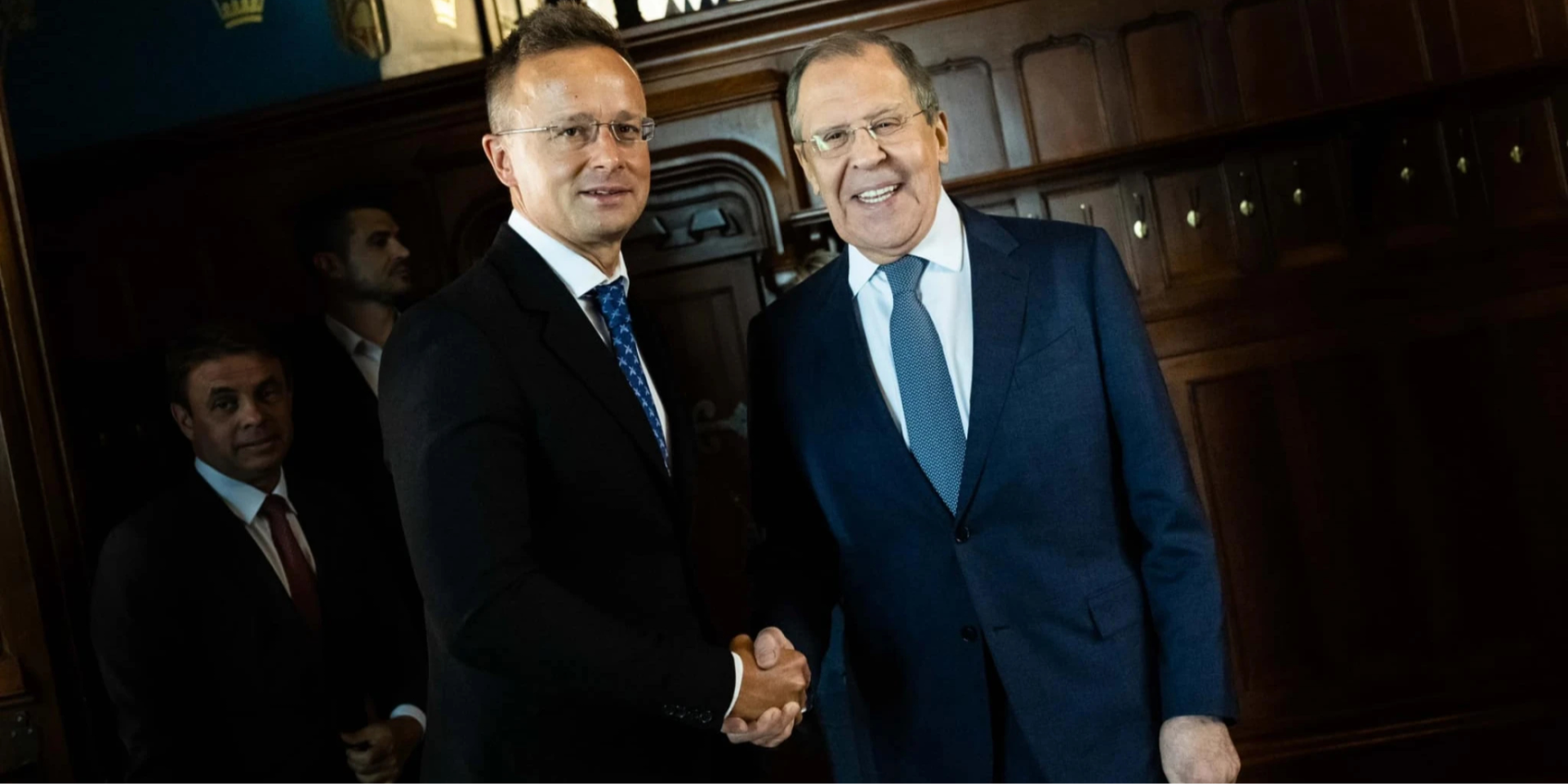
Among other things, the transcript of the conversation showed that Péter Szijjártó had offered Sergey Lavrov to forward confidential EU documents through the Hungarian Embassy in Moscow. (Photo: Szijjártó Péter / Facebook)
A newly released recording suggests Hungarian Foreign
Minister Péter Szijjártó coordinated with Russian Foreign Minister Sergey
Lavrov in ways that could hinder Ukraine’s accession to the European Union. The
recording is part of an investigation
published on April 8 by Vsquare, FRONTSTORY, Delfi Estonia, The Insider and the
Investigative Center of Ján Kuciak, or ICJK.
The consortium said the material shows Szijjártó sharing
details with Lavrov about negotiations over Ukraine’s EU path, including in one
exchange in which he promised to send a document through the Hungarian Embassy
in Moscow.
The conversation took place on July 2, 2024, the day Prime
Minister Viktor Orbán visited Kyiv.
“Lavrov: Look, I wanted also to call and check about [the]
compromise you reached with [the] European Union on opening of the negotiations
for Ukraine on accession. And there were reports that the decisive role was
played by the language of national minorities.
Szijjarto: Absolutely. It was the case.
Lavrov: We are trying to get hold of the exact document,
but…
Szijjarto: I will send it to you. It’s not a problem.”
Later in the same exchange, Lavrov added: “Ok, Peter, if you
can send me the document, I would appreciate this.”
Szijjártó replied: “I immediately do it. I send it to my
embassy in Moscow, and my ambassador will forward it to your chief of staff,
and then it’s at your disposal.”
It remains unclear exactly which document was being
discussed. A senior EU official told the journalists it was “with 99 percent
certainty” the negotiating framework, which had already been made public at the
time, making Lavrov’s request difficult to explain. A senior Western
intelligence official suggested Lavrov may have been testing how far Szijjártó
was willing to go in providing Russia with information.
“We now have evidence that, while Orbán and Szijjártó were
officially campaigning for the rights of ethnic Hungarians in Ukraine, the
Hungarian Foreign Ministry was conspiring with Lavrov to advance the cause of
Russian minority rights in the country,” the journalists wrote.
In another recording, dated June 17, Szijjártó boasted to
Lavrov about his meetings with politicians in Brussels.
“Although usually they shout at me…at the end of the day I
always tell myself at least I had fun,” Szijjártó said.
“Yeah, you know, you know how to handle them,” Lavrov
replied.
Szijjártó then described in detail his talks with the
European Union over Hungary’s 11 demands and “how to give back those rights we
have already had.”
Lavrov, however, quickly steered the conversation to
Russians in Ukraine and to how failure to meet the Kremlin’s demands could slow
or derail Ukraine’s EU accession process.
Szijjártó replied that respect for minority rights was a
universal principle governing the work of the Council of Europe — “one day it
is your minority and then the next day ours” — a response that, in the
journalists’ view, appeared to satisfy Lavrov.
Later in the same conversation, Szijjártó added: “You know,
Sergey, … I am always at your disposal.”
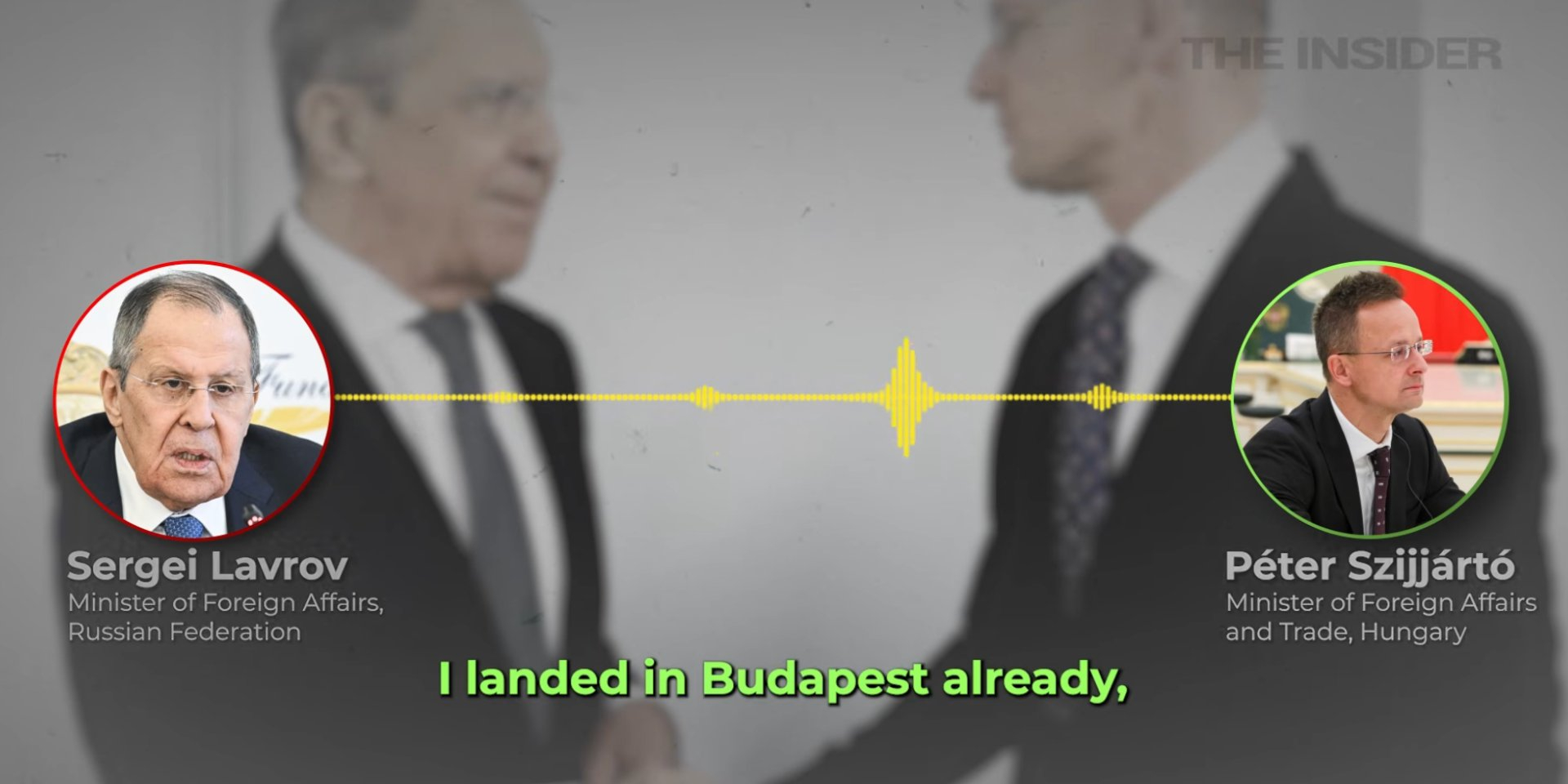
A source in the circle of senior EU officials told Vsquare
that it “makes me want to vomit, the way Szijjártó is discussing with the
aggressor how to put pressure on Ukraine, saying that today it is our
minorities and tomorrow it will be yours.”
“At the same time, the negotiating framework says Ukraine
must comply with all its international obligations and bilateral agreements
with EU member states on these issues. Szijjártó is essentially also lying to
Lavrov, because the negotiating framework does not concern other countries or
minorities, but speaks exclusively about Ukraine’s agreements with EU member
states,” the outlet wrote.
Later in the same exchange, Szijjártó also described a
conversation with then-Canadian Prime Minister Justin Trudeau, a strong
supporter of Ukraine. The Hungarian minister said he had tried to explain to
Trudeau “the importance of maintaining an open direct line of communication
with Russia in order to end the war as quickly as possible.”
“And we can pass along any messages, we can establish any
contacts. And, you know, Trudeau was nodding: ‘How good! How good!’ And I said:
‘All right, Mr. Prime Minister, you are nodding now, but then please do not
treat maintaining contacts with Russia as something bad,’” Szijjártó recounted.
“Yeah. Trudeau is a disaster,” Lavrov replied.
The journalists also said Szijjártó shared information with
Lavrov about possible new European pressure measures against Russia. More than
that, they said, the Hungarian minister consulted with Lavrov on steps that
would hurt Ukraine and the EU while benefiting the Kremlin.
One example came during the European Council summit on Dec.
14, 2023. European leaders were deciding then whether to open accession talks
with Ukraine and Moldova. During a break between meetings, Szijjártó called
Moscow and outlined Hungary’s strategy to Lavrov.
At one point, after listening to Szijjártó, Lavrov said:
“Ok, good, yes, yes, excellent. Sometimes good-willed direct blackmailing is
the best option.”
Budapest did not succeed that time, the journalists wrote.
Orbán left the room during the vote on whether to begin
Ukraine’s EU accession talks. According to the investigation, that was part of
a prearranged maneuver that allowed the other 26 leaders to adopt the decision
unanimously while Hungary abstained and avoided openly blocking it. Szijjártó,
however, remained in the room and kept Moscow informed of developments almost
in real time, the report said.
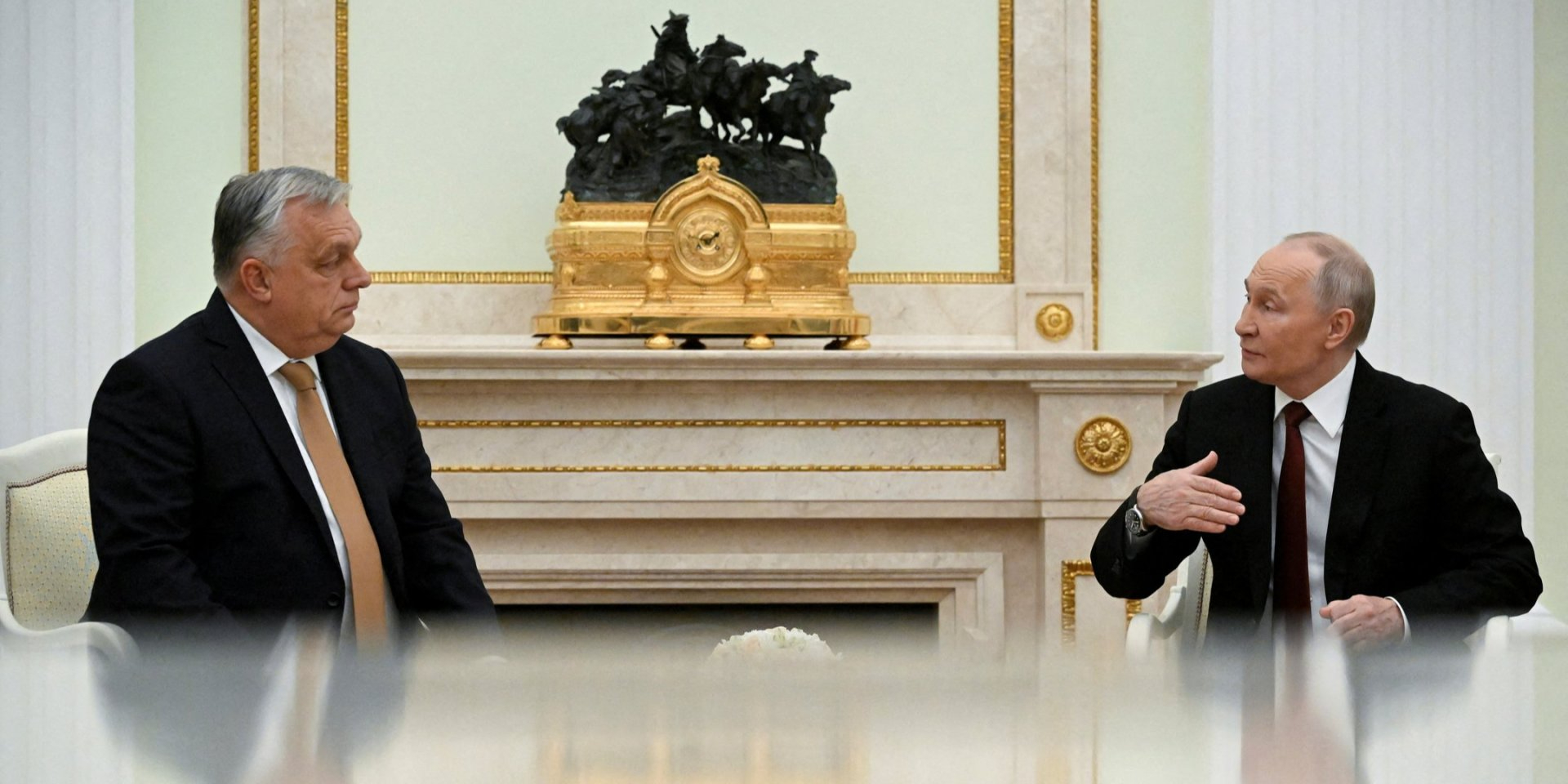
On March 21, The Washington Post, citing its own sources,
reported that Szijjártó had regularly briefed Moscow on the course of European
Union meetings.
On March 23, Hungarian investigative journalist Szabolcs
Panyi published a transcript indicating that in 2020, during a conversation
with Lavrov, Szijjártó had asked him to help secure victory in Slovakia for the
Social Democratic Party, which at the time was led by Peter Pellegrini.
On March 24, Szijjártó confirmed that he had been in contact
with Lavrov during closed-door EU meetings. He said he had done so because
certain issues “need to be discussed with partners outside the European Union.”
Szijjártó also stressed that he speaks not only with Lavrov,
but also “with our American, Turkish, Israeli, Serbian and other colleagues
before and after EU Council meetings.”
On March 31, Vsquare published another recording of a
conversation between Szijjártó and Lavrov.
According to the published material, Lavrov called Szijjártó
on Aug. 30, 2024, less than an hour after the Hungarian minister arrived in
Budapest from St. Petersburg. Lavrov reminded him that Russian oligarch Alisher
Usmanov wanted his sister, Gulbakhor Ismailova, removed from EU sanctions
lists, and Szijjártó promised to help.
Will you support Ukraine’s free press?
Dear reader, as all news organizations, we must balance the pressures of delivering timely, accurate, and relevant stories with requirements to fund our business operations.
As a Ukrainian-based media, we also have another responsibility – to amplify Ukraine’s voice to the world during the crucial moment of its existence as a political nation.
It’s the support of our readers that lets us continue doing our job. We keep our essential reporting free because we believe in our ultimate purpose: an independent, democratic Ukraine.
If you’re willing to support Ukraine, consider subscribing to our Patreon starting from 5$ per month. We are immensely grateful.
Please help us continue fighting Russian propaganda.
Truth can be hard to tell from fiction these days. Every viewpoint has its audience of backers and supporters, no matter how absurd.
If conscious disinformation is reinforced by state propaganda apparatus and budget, its outcomes may become deadly.
There is no solution to this, other than independent, honest, and accurate reporting.
We remain committed to empowering the Ukrainian voice to push against the muck. If you’re willing to stand up for the truth – consider supporting us on Patreon starting from 5$ per month. Thank you very much.
Will you help tell Ukraine’s story to the world?
Twenty years ago, most people hadn’t even heard of Ukraine. Today, the country is on everyone’s lips and everyone’s headlines. War pushed us on the front page. But there are many other things we do that we are proud of – from music and culture to technology.
We need your help to tell the world Ukrainian story of resilience, joy, and survival. If you’re willing to back our effort, consider supporting us on Patreon starting from 5$ per month. We are immensely grateful.
Follow us on Twitter, Facebook and Google News
