

Preparing a new generation for years of war: What Putin’s latest Security Council meeting signals — ISW analysis
On June 10, Russian dictator Vladimir Putin convened a
meeting of Russia’s Security Council, focusing heavily on so-called
“military-patriotic” programs for youth and government initiatives aimed at
promoting Russian nationalism, according to a new analysis
by the Institute for the Study of War (ISW).
ISW analysts suggest that Putin remains committed to
advancing anti-Western sentiment and militarizing Russian youth while trying to
balance Russia’s multiethnic makeup with rhetoric centered on ethnic Russian
nationalism.
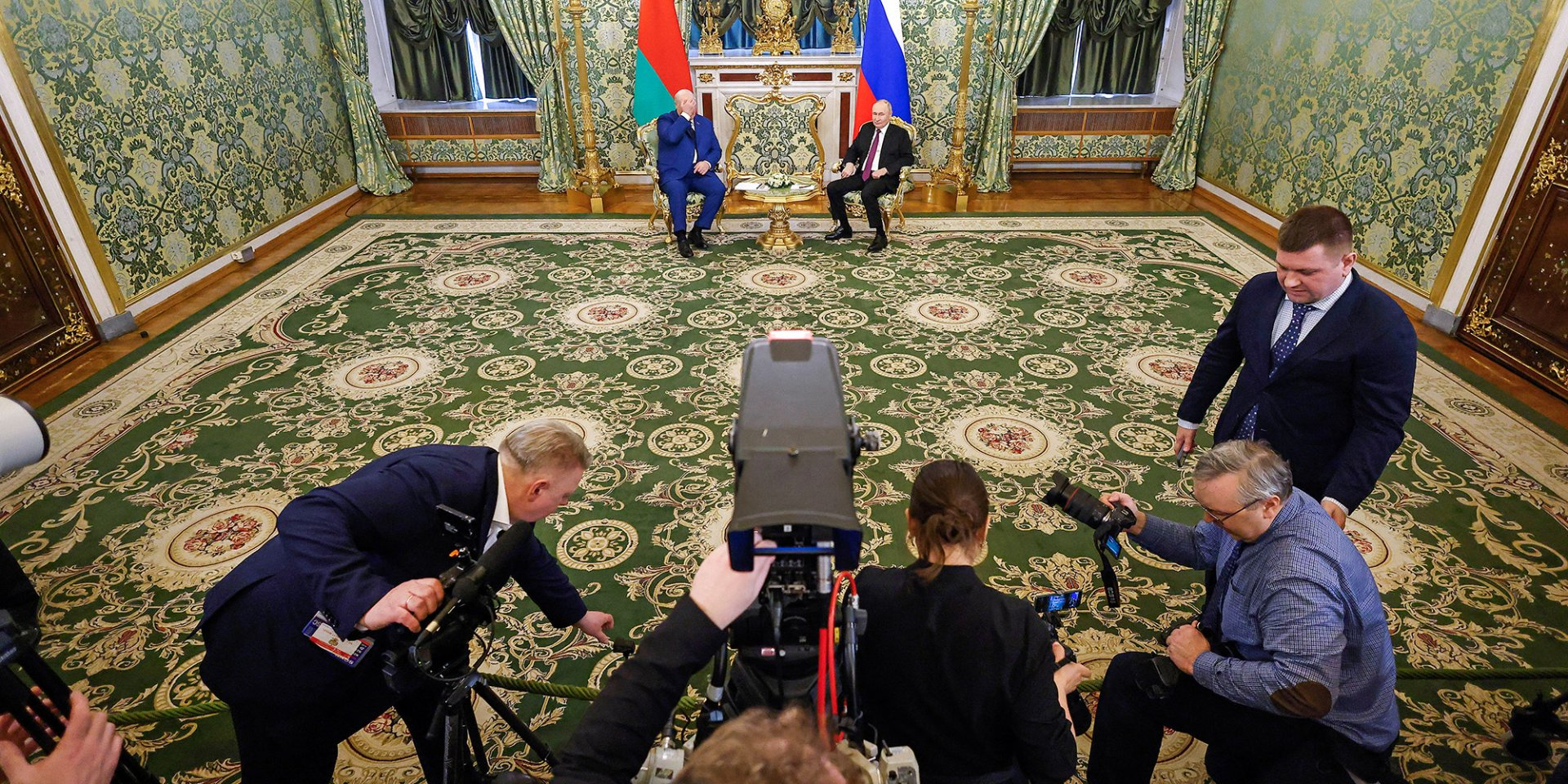
The experts note that Putin highlighted the activities of
the so-called Movement of the First, a youth organization
promoting “military-patriotic” education both in Russia and in the occupied
territories of Ukraine, as well as Yunarmiya, which is tasked with
instilling pro-war views in Russian children and teenagers — and in Ukrainian
children living under occupation. The dictator also praised the so-called
Conversations About Important Things, a state-mandated
series of weekly school lessons often featuring lectures by Russian soldiers
who have fought in Russia’s war against Ukraine.
ISW analysts see these and other points raised by Putin at
the Security Council meeting as part of his drive to foster anti-Western and
pro-war attitudes, especially among Russian youth — likely to prepare society
for a prolonged war against Ukraine and a potential future conflict with NATO.
The analysts recall that Putin has recently begun promoting
an “unofficial ideology based on Russian nationalism,” positioning Russia in
opposition to the West. According to ISW, this marks a shift from Putin’s
earlier rhetoric, which at least nominally promoted Russia’s multiethnic and
multireligious diversity. Instead, on June 10, the dictator once again called
for action against forces fueling interethnic and interreligious tensions in
Russia, while emphasizing the “unity” of its people.
ISW views these conflicting statements as evidence that
Putin remains uncertain whether to fully embrace a nationalist ideology
centered on ethnic Russians or to account for the risks of fragmentation among
Russia’s multiethnic population.
The analysts continue to assess that Putin is attempting to
balance the demands of Russia’s influential xenophobic and ultranationalist
community — a key segment of his voter base — with the need to rely on migrants
to offset current economic and demographic problems caused by labor shortages
stemming from military mobilization and Russia’s long-term population decline.
The military war may be swinging in our favor, but the information war continues.
Just as an army needs soldiers, so does a free society need its journalists to ensure that people have access to honest, trustworthy voices to understand the world around them.
For the past five years, The New Voice of Ukraine has been working tirelessly to push back against Russian narratives and defend democracy. But we cannot do it alone.
Please consider supporting us on Patreon for just $5 a month – your donation does directly to supporting journalists and ensuring that this front of the infowar says solid and defended.
Thank you.
Follow us on Twitter, Facebook and Google News
