

Russia moves armor to Dobropillia, prepares mechanized attacks this fall
 Read NV on Google
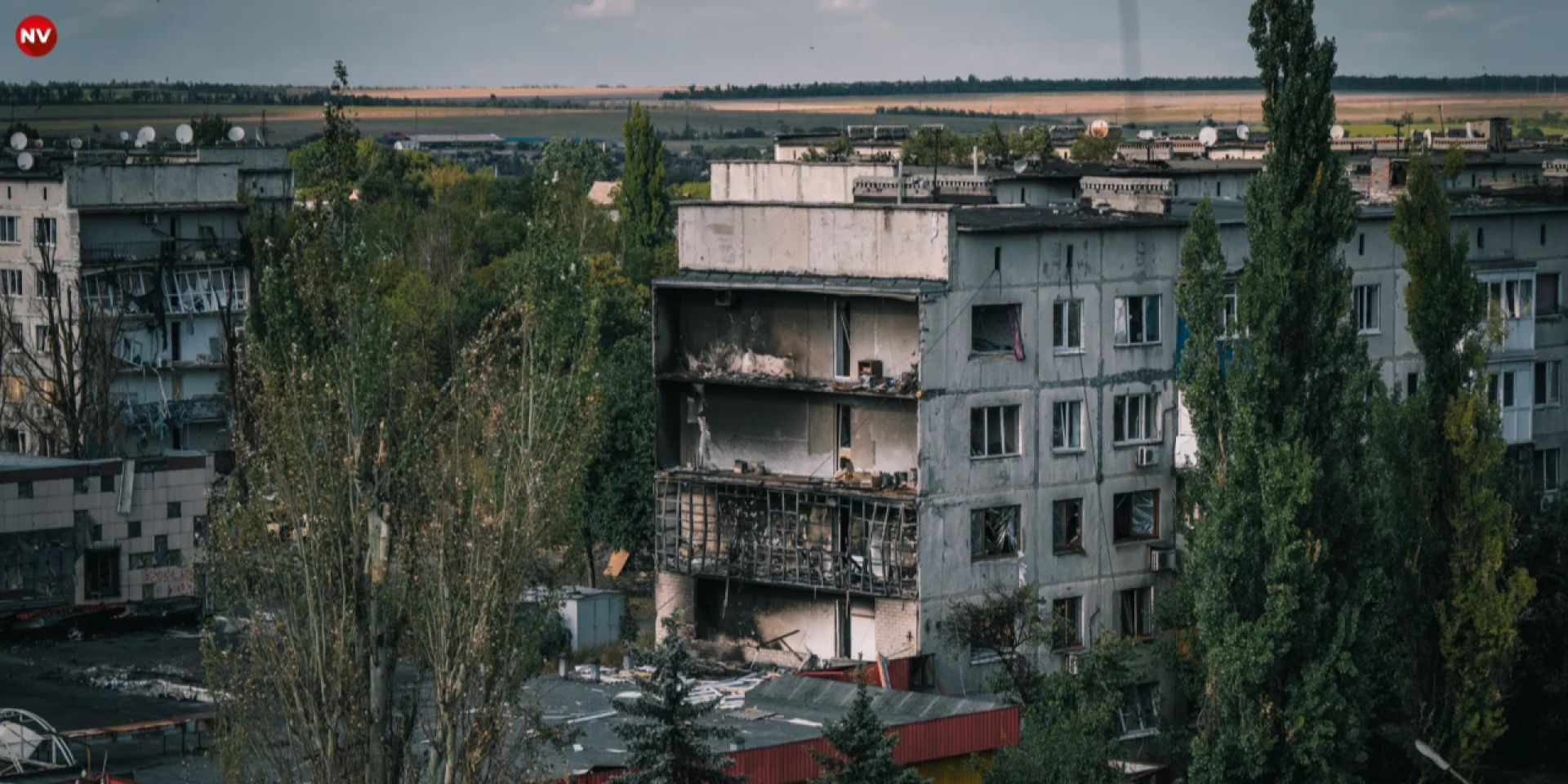
The city of Dobropillia after Russian attacks in September 2025 (Photo: Serhii Okunev / NV)
Russian occupation forces are moving armored vehicles to the
Dobropillia sector and preparing for mechanized attacks this fall, the
Institute for the Study of War said in a new report.
Analysts noted that on Sept. 11, Denys Prokopenko, commander
of Ukraine’s 1st Azov Corps, said Russia’s 51st, 41st and 8th Combined Arms
Armies were preparing for mechanized offensives in the Dobropillia sector this
fall, seeking to take advantage of seasonal weather changes more favorable to
mechanized operations.
Prokopenko also said about 1,200 drone crews from Russia’s
elite Rubicon unit were operating in the Dobropillia sector. He said this
indicated that Russian forces likely intend to use drones to support assault
operations.
He added that Russian forces would likely begin reinforcing
their existing assault units, numbering about 200 infantry troops, with
mechanized columns of about 50 armored vehicles to divert Ukrainian forces and
increase the chances of a successful breakthrough.
Prokopenko also said Russia’s offensive campaign would peak
in September 2026 and that Russian forces would begin changing tactics by
October 2026, shifting toward mechanized breakthrough attempts. He said they
would also seek to capture at least one settlement in the sector before the
fall campaign ends to establish a foothold for further offensive operations.
ISW said both Ukrainian and Russian forces are experimenting
with reintroducing limited elements of mechanized maneuver at the tactical
level, with Ukrainian efforts proving significantly more effective.
Analysts said Russia’s buildup of armored vehicles in the
Dobropillia sector indicates that the Russian military command likely intends
to expand the role of mechanized attacks in fall weather as it seeks to break
through and envelop the so-called “fortress belt” from the south.
Operation Vivaldi
On Sept. 15, Third Army Corps commander Brig. Gen. Andriy
Biletskyi publicly confirmed for the first time that the Ukrainian army was
conducting an offensive in northern Donetsk Oblast.
The operation was named Vivaldi. So far, Ukraine’s Defense
Forces have cleared 75 square kilometers and liberated 10 square kilometers.
Russian losses at this stage of the operation have included
about 1,500 soldiers, more than 12,000 drones and hundreds of armored vehicles,
artillery systems and other vehicles.
Ukrainian unmanned systems units also cut Russian logistics
routes. Following strikes by the Third Army Corps, Russian forces moved fuel
and lubricant supply operations outside Ukraine, to Voronezh Oblast.
The Institute for the Study of War concluded that Operation
Vivaldi enabled Ukraine’s Defense Forces to achieve an important
operational-level objective by disrupting Russian attempts to encircle
Ukraine’s “belt of fortress cities” in the Donbas. Ukrainian advances north of
Lyman made it impossible for Russia to carry out what analysts called its
“already unrealistic plan” to encircle the fortress cities from the north and
south.
The military war may be swinging in our favor, but the information war continues.
Just as an army needs soldiers, so does a free society need its journalists to ensure that people have access to honest, trustworthy voices to understand the world around them.
For the past five years, The New Voice of Ukraine has been working tirelessly to push back against Russian narratives and defend democracy. But we cannot do it alone.
Please consider supporting us on Patreon for just $5 a month – your donation does directly to supporting journalists and ensuring that this front of the infowar says solid and defended.
Thank you.
Follow us on Twitter, Facebook and Google News
