

Russia's Starlink satellite rival fails to reach orbit again
 Read NV on Google
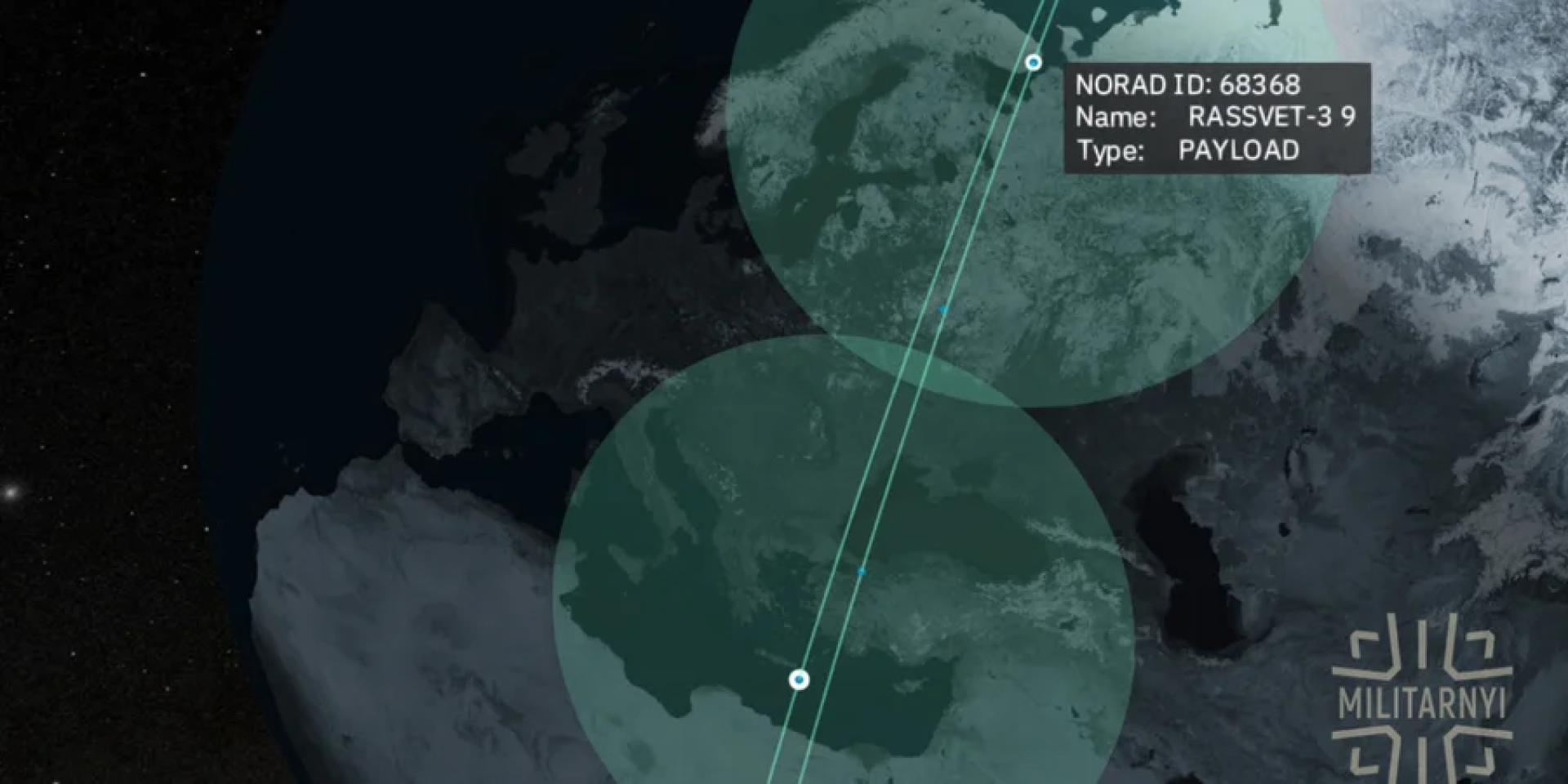
Coverage provided by the Rassvet satellites during their flyover of Ukraine on July 31, 2026 (Photo: Militarnyi via satcat)
A second batch of Russian Rassvet satellites — which Russia has claimed are equivalent to Starlink — failed to reach the altitude needed for operation in space, according to the latest report from the U.S.-based Institute for the Study of War released on Aug. 31.
Citing data from the satellite tracker N2YO, ISW researchers said the second batch of 16 Rassvet satellites was launched on July 19. As of Aug. 31, none of them had reached their planned operational altitude of 550 kilometers (about 340 miles).
Most of the satellites ended up at altitudes of 300 to 400 kilometers (roughly 185 to 250 miles), well below the planned 870 kilometers (about 540 miles). ISW noted that some of the satellites are already losing orbit, and at least two are reportedly on a trajectory to re-enter Earth's atmosphere.
Researchers explained that the lower a satellite flies, the shorter its operational lifespan due to atmospheric drag.
Of the first batch, launched March 24, 12 of 16 satellites reached the required altitude. As of late August, those satellites remain at the 550-kilometer mark.
Russia lost access to Starlink connectivity on Feb. 1, prompting it to rely on its own Rassvet system. The failure of the latest satellite batch suggests Moscow was not prepared for the pace of deployment it needs, according to ISW.
ISW also noted that even this partial satellite constellation poses a threat to Ukraine, since Russian forces use Rassvet satellites to guide drones with greater precision.
The report also states that Bureau 1440, the aerospace company developing the Rassvet system, has announced plans for "dozens" more launches and to add "hundreds" of new satellites. At the same time, Russia needs at least 200 to 300 operational satellites to maintain stable, round-the-clock connectivity over Ukrainian territory. However, ISW noted that Russian forces are unlikely to reach that target quickly due to a shortage of launch vehicles.
Russia relies on the expensive and scarce Soyuz-2.1b rocket to launch these satellites. Only six to eight launches of this rocket have taken place since 2022, and at that pace, Russia would be able to put at most 128 satellites into orbit over four years.
Overnight into Aug. 15, Ukraine's Defense Forces struck the Progress Rocket Space Center, a facility that manufactures Soyuz-type launch vehicles.
On Aug. 23, Ukraine also attempted to strike the Plesetsk Cosmodrome — two days before a Soyuz-2.1b rocket was launched from there carrying a GLONASS-K1 satellite for Russia's GPS equivalent. Both batches of Rassvet satellites were launched from Plesetsk.
On July 20, it was reported that Russian company Bureau 1440 had placed a second group of communications satellites into orbit for the Rassvet project, considered Russia's answer to Starlink. The company had placed the first satellites in this constellation into orbit in March.
Serhii "Flash" Beskrestnov, an adviser to the president of Ukraine, said both launches were carried out from the Plesetsk Cosmodrome. Aside from Plesetsk, satellites for this system could theoretically also be launched from two other cosmodromes — Baikonur and Vostochny.
According to Beskrestnov, a single Soyuz-2.1b rocket can place 20 satellites into orbit. He estimated that Russia would need to carry out 12 to 15 such launches to build a basic satellite constellation. All components of the Soyuz-2.1b rocket, except its engines, are produced by the Progress plant, which Ukraine has struck using Flamingo missiles.
Beskrestnov believes that a functioning Russian satellite network like Rassvet could pose a serious threat to Ukraine.
On Aug. 1, Ukrainian outlet Militarnyi reported, citing satellite communications expert Volodymyr Stepanets, that Rassvet satellites provide at least two "communication windows" over Ukraine per day, each lasting more than an hour.
The military war may be swinging in our favor, but the information war continues.
Just as an army needs soldiers, so does a free society need its journalists to ensure that people have access to honest, trustworthy voices to understand the world around them.
For the past five years, The New Voice of Ukraine has been working tirelessly to push back against Russian narratives and defend democracy. But we cannot do it alone.
Please consider supporting us on Patreon for just $5 a month – your donation does directly to supporting journalists and ensuring that this front of the infowar says solid and defended.
Thank you.
Follow us on Twitter, Facebook and Google News
