

Ukraine downs just 60% of Russia's new jet-powered drones, Air Force warns
 Read NV on Google
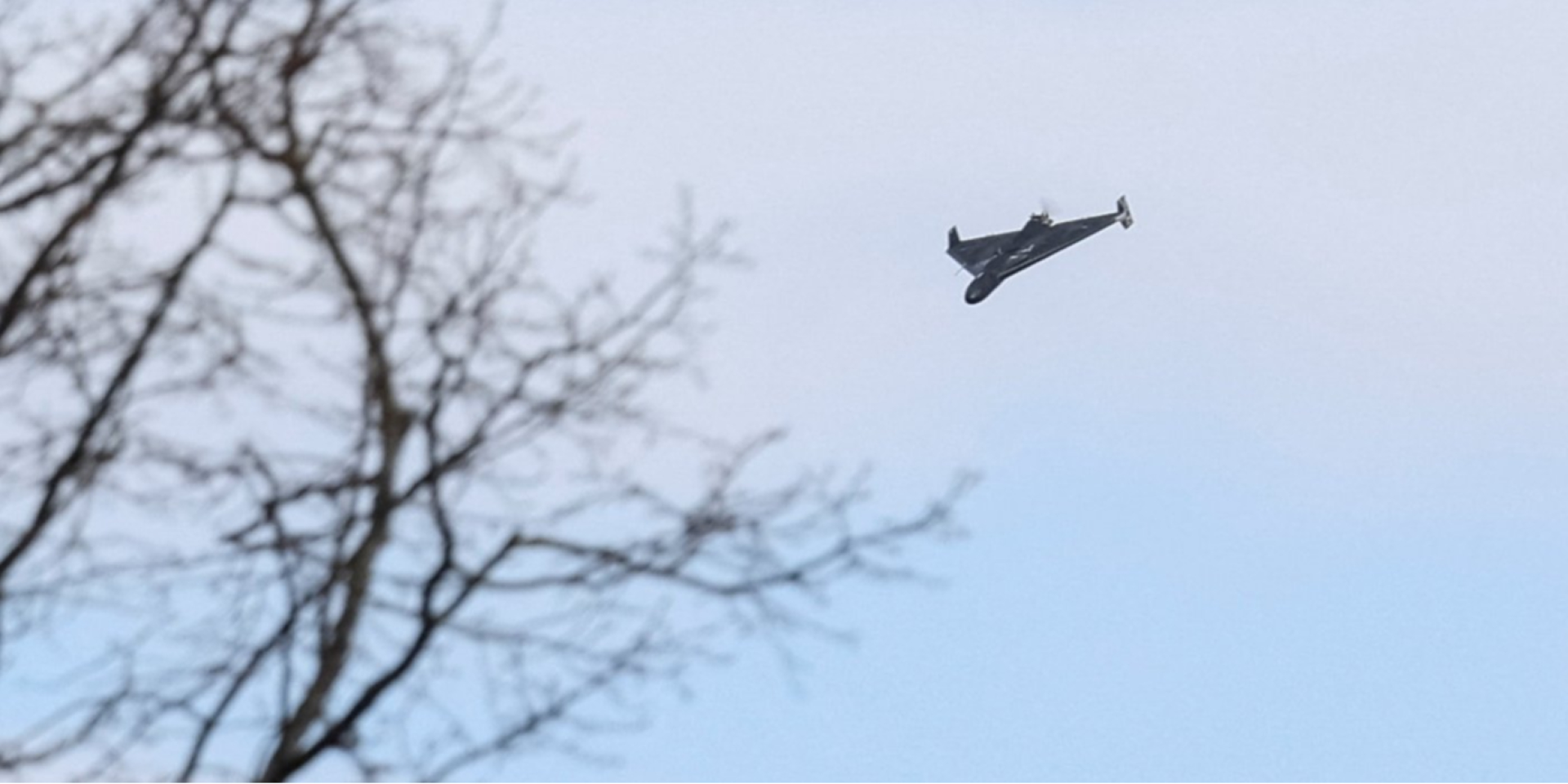
Russian Shahed drone (illustrative photo) (Photo: REUTERS/Stringer)
Ukraine intercepts only about 60% of Russian jet-powered strike drones compared to 90–95% of conventional models, Air Force Communications Head Yurii Ihnat told Financial Times on Sept. 14.
Over recent weeks, Russia's newly deployed turbojet-powered Geran-4 and Geran-5 strike drones have repeatedly penetrated Ukrainian urban air defenses, evading interceptors far more effectively than earlier propeller-driven Shaheds and presenting an acute air-defense challenge.
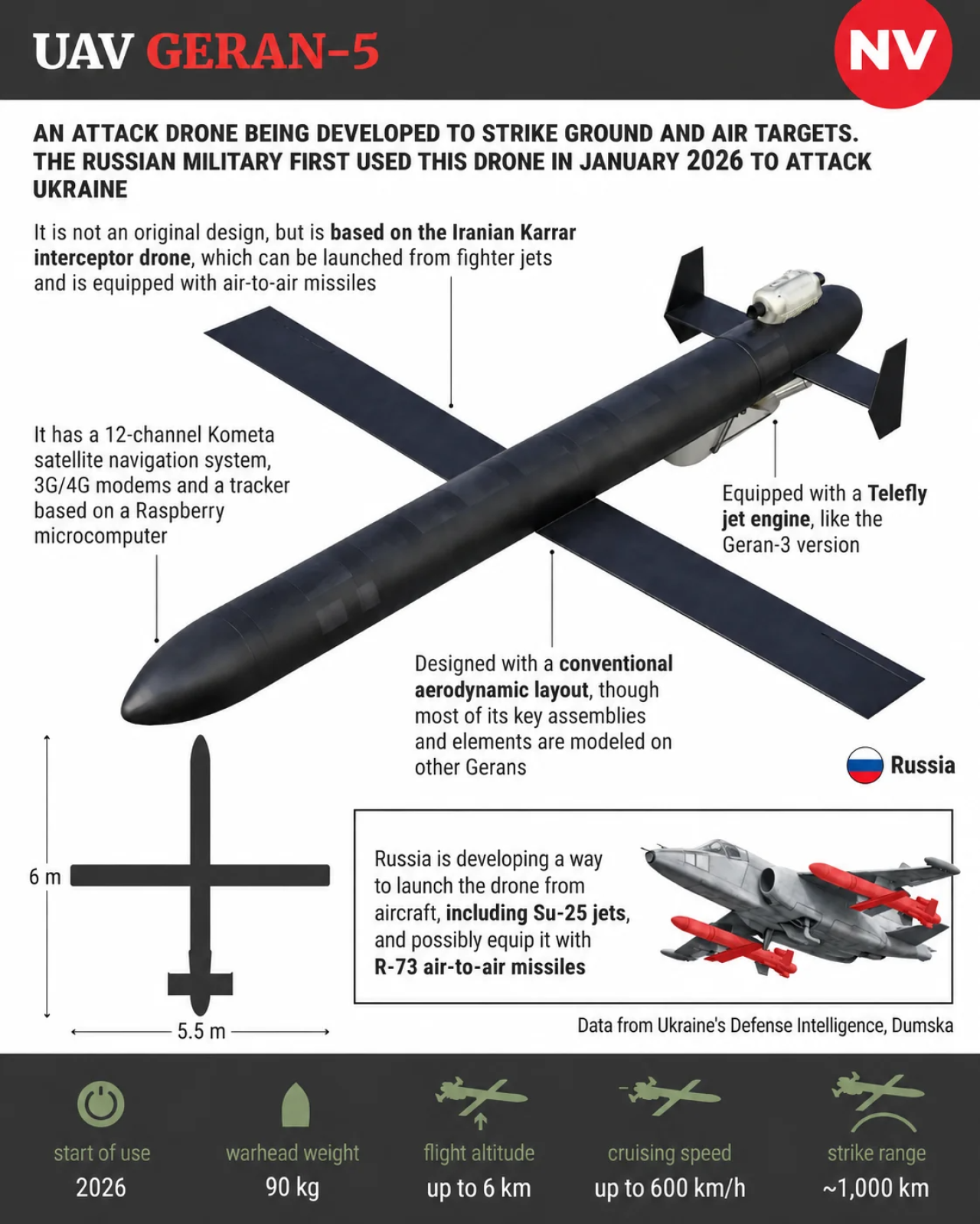
While the original propeller-driven Geran-1 carries a 20-kilogram warhead at a top speed of 185 km/h, the jet-powered Geran-5—first deployed in January 2026 — can reach speeds of up to 600 km/h, delivering a 90-kilogram warhead over an operational range of 1,000 kilometers. While the Geran-4 features a streamlined aerodynamic redesign of the original delta-wing airframe, the Geran-5 utilizes an entirely new configuration resembling a miniature cruise missile.
The Financial Times noted that modernizations extend well beyond propulsion and airframe geometry. Older Shahed variants relied on basic pre-programmed satellite navigation, whereas newer models feature forward-looking infrared thermal cameras, AI-assisted autonomous terminal guidance, Russian CRPA anti-jamming antennas, and Chinese commercial mesh-networking radio modems.
"A Russian operator cruises at an altitude of 2 to 5 kilometers, identifies the target, locks onto it via camera, and the Shahed executes an automated terminal dive," presidential adviser Serhii Beskrestnov stated, noting that nearly all Russian jet-powered drones now targeting Ukraine carry these optical suites.
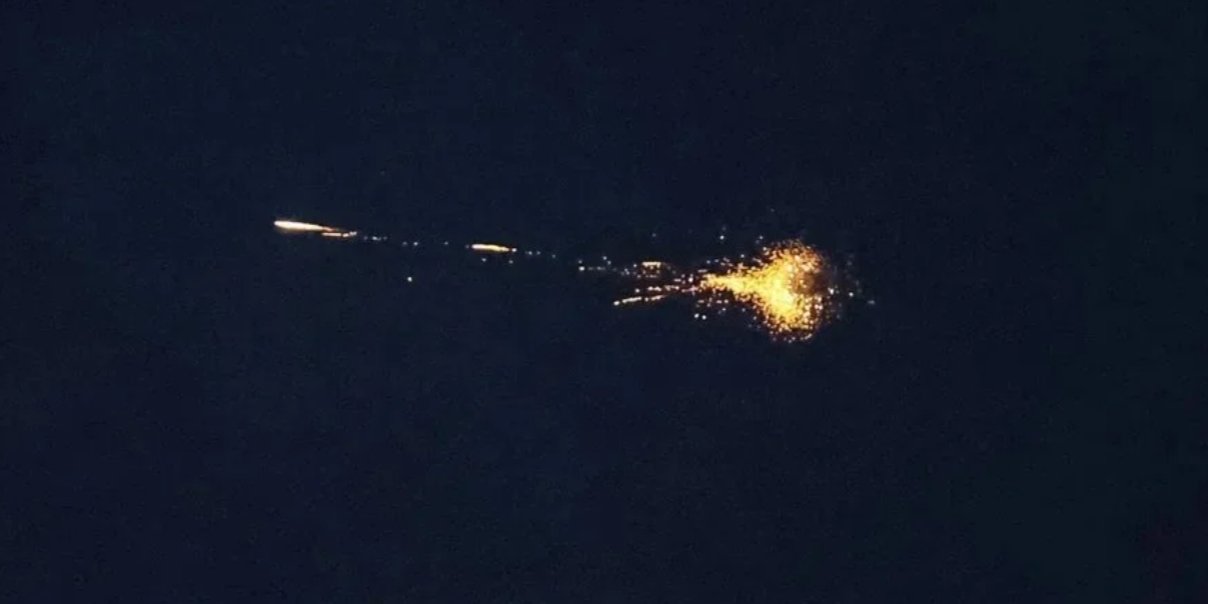
Ihnat emphasized that countering these high-speed targets has forced the Air Force to rely heavily on fighter aircraft. Some Ukrainian pilots have been forced to engage the drones at close range using onboard 30mm autocannons — an exceptionally hazardous tactic due to blast fragmentation.
Domestic tech teams are developing countermeasures:
Wild Hornets: The drone manufacturer is finalizing tests on an indigenous high-speed interceptor designed specifically to engage Russian jet drones, with serial production slated to begin shortly.
National initiative: President Volodymyr Zelenskyy confirmed that 67 Ukrainian defense enterprises are actively engineering counter-drone technologies to defeat Russia's new high-speed threats.
Russian stockpiles and strategic posture
Jan. 11: Ukraine’s Military Intelligence (HUR) revealed that Russian troops first deployed the Geran-5 in combined aerial barrages in January 2026. The UAV measures approximately six meters in length with a 5.5-meter wingspan, and Russian forces are exploring aerial-launch methods using Su-25 attack aircraft.
August stockpiles: HUR estimated that by August 2026, Russia stockpiled approximately 6,200 Geran-series loitering munitions of all variants for massed strikes on Ukraine.
Bases near NATO: Citing satellite imagery and leaked defense dossiers, The Telegraph reported that Russia constructed several covert launch installations capable of firing jet-powered Shahed drones for deep strikes toward NATO territory.
The military war may be swinging in our favor, but the information war continues.
Just as an army needs soldiers, so does a free society need its journalists to ensure that people have access to honest, trustworthy voices to understand the world around them.
For the past five years, The New Voice of Ukraine has been working tirelessly to push back against Russian narratives and defend democracy. But we cannot do it alone.
Please consider supporting us on Patreon for just $5 a month – your donation does directly to supporting journalists and ensuring that this front of the infowar says solid and defended.
Thank you.
Follow us on Twitter, Facebook and Google News
