

Ukraine’s Dragon air defense system gets new missile to hunt Shahed drones
 Read NV on Google
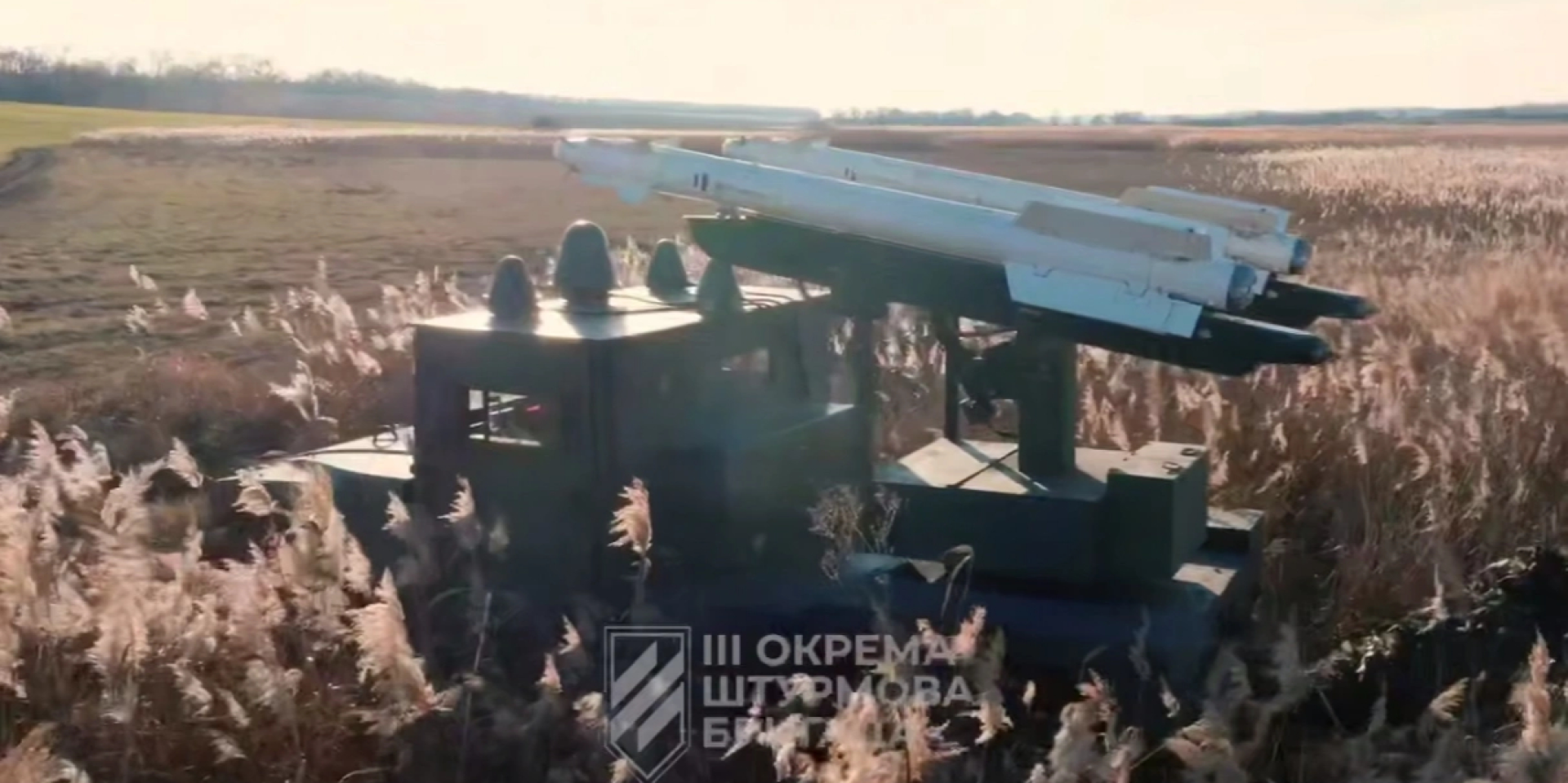
Dragon surface-to-air missile system in service with the 3rd Army Corps, 2025. (Photo: 3rd Army Corps / ТГ)
In June 2026, it emerged that a new small surface-to-air
missile with an infrared homing seeker is being developed for Ukraine’s Dragon
air defense system, which became part of the country’s air defense network more
than a year ago.
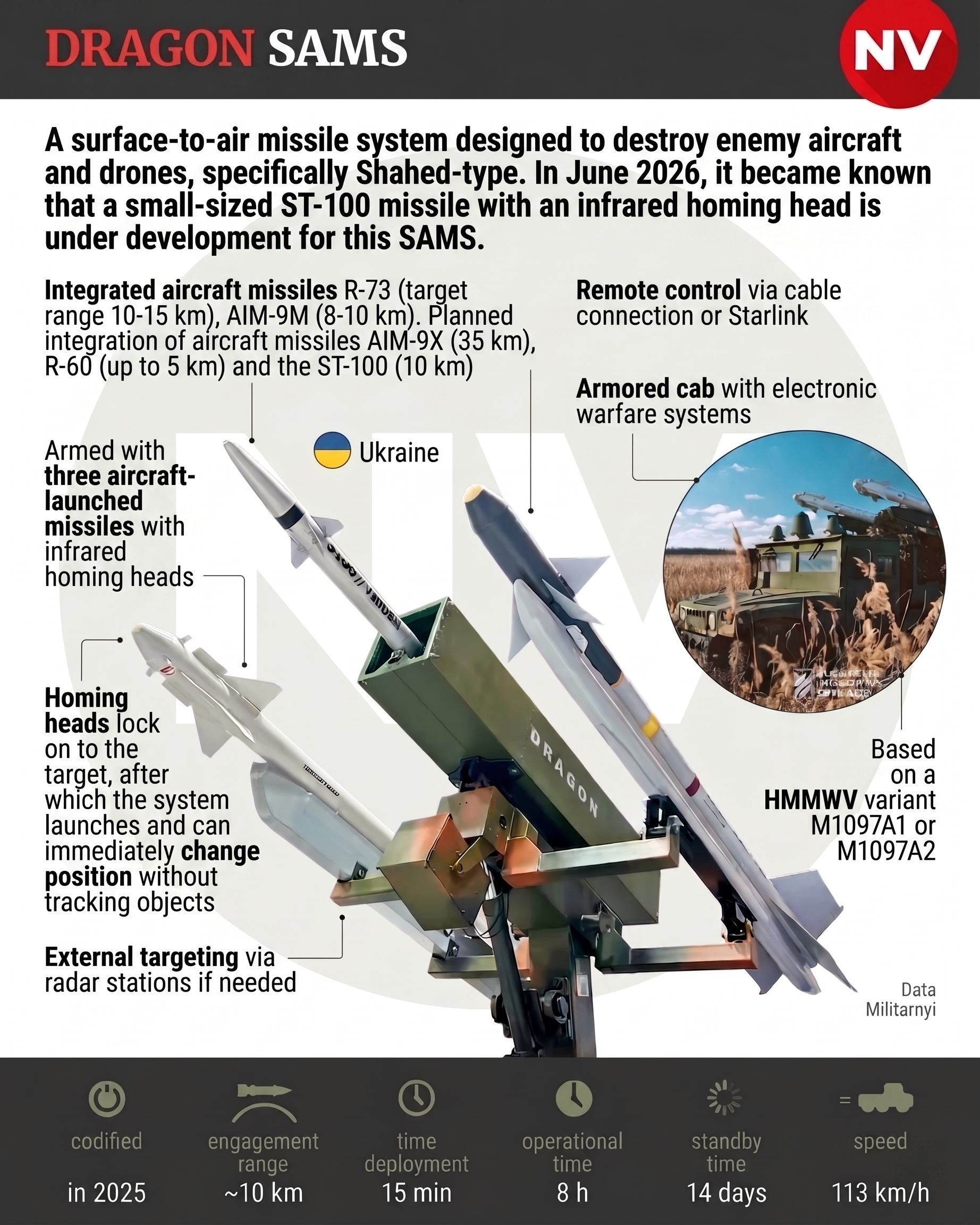
In its infographic, NV looks back at what the system is.
Dragon is a Ukrainian-made surface-to-air missile system
designed to destroy enemy aircraft and drones, including Shahed-type drones. In
June 2026, it became known that the small ST-100 missile with an infrared
homing seeker was being developed for the system.
The defense outlet Militarnyi
reported in mid-June 2026, citing a representative of the Center of Innovative
Technologies Program, that Dragon “has been codified and used on the
battlefield for a year and a half” — meaning it has become part of Ukraine’s
air defense system. Dragon is known to be used to destroy Russian Shaheds and
similar drones.
The Dragon launcher is mounted on an HMMWV off-road vehicle
in the M1097A1 or M1097A2 variant and carries three adapted air-to-air
missiles. Initially, it used only older Soviet R-73 air-to-air missiles. After
the system was upgraded, it began using U.S. AIM-9M missiles. A new Ukrainian
ST-100 surface-to-air missile and R-60 missiles are now expected to be added to
the system’s arsenal.
Key specifications of the Dragon air defense system:
- Country of manufacture: Ukraine
- Codified: 2025
- Engagement range: about 10 kilometers
- Deployment time: 15 minutes
- Operating time: 8 hours / 14 days in standby mode
- Speed: 113 kph
The system has an armored cabin with electronic warfare
equipment.
It can be controlled remotely through a cable link or Starlink.
External target designation using radar stations is possible when needed.
When using missiles with homing seekers, the missiles lock
onto the target before launch, allowing the system to fire and immediately
change position without tracking the target afterward.
The system currently uses:
- Integrated R-73 air-to-air missiles, with a range of 10–15
kilometers
- AIM-9M missiles, with a range of 8–10 kilometers
Planned integrations include:
- AIM-9X air-to-air missiles, with a range of 35 kilometers
- R-60 air-to-air missiles, with a range of up to 5 kilometers
- ST-100 surface-to-air missiles, with a range of 10
kilometers
The military war may be swinging in our favor, but the information war continues.
Just as an army needs soldiers, so does a free society need its journalists to ensure that people have access to honest, trustworthy voices to understand the world around them.
For the past five years, The New Voice of Ukraine has been working tirelessly to push back against Russian narratives and defend democracy. But we cannot do it alone.
Please consider supporting us on Patreon for just $5 a month – your donation does directly to supporting journalists and ensuring that this front of the infowar says solid and defended.
Thank you.
Follow us on Twitter, Facebook and Google News
