

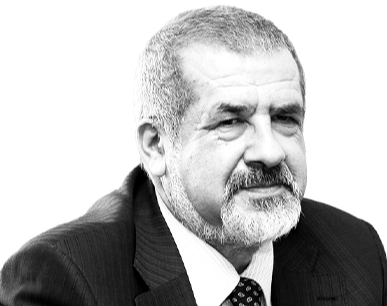
Everyone in Crimea everyone is shocked. Will there be enough water for the peninsula? — opinion
 Read NV on Google
Local collaborators have also realized this to some extent.
I know about predictions regarding the threat of Russia potentially mining the Titan chemical plant in Crimea. The factory produces various poisonous substances. If they enter the environment in an uncontrolled state, it is understood that they will poison not only the air (one of the main threats to people) but also everything else in the vicinity. This means both the Kherson region and Crimea. We have yet to learn much about the volumes of substances stored there, what the wind there could be at the time of the event, and so on. Experts should examine all possible scenarios. Another artificial catastrophe from the Russian occupiers after they destroyed the Kakhovka hydroelectric plant cannot be ruled out.
The Titan plant is currently operational. There is a production cycle for the production of a variety of products. The city of Armyansk primarily exists to serve the plant and house its employees.
If it is not a very dry summer, it will be enough to provide them with water
Russians will leave behind a devastated territory. They seem to have accepted that they will not hold the land they've captured. Therefore, they decided to leave these occupied territories in such a state that they cannot be rebuilt for decades to come. What the Russians call an evacuation is not to preserve the health and lives of people in threatening conditions. It is intended to complicate the situation further and then resolve it in the interests of those who created it. In other words, in the interests of the Russian Federation. What does the evacuation of people who are currently affected by flooding mean? It is clear that Russia would, logically, be able to bring evacuees to Crimea. But we understand that the Crimean occupation authorities will not even create the minimum standard of conditions for them, even temporarily.

Russia will likely force these people into its own territory. They will do everything to make large groups of people constantly move, demoralizing and suppressing them. Hostages are a resource for them, so they will drive them further toward the Russian Federation. If they need to cover up them, they will cover them up. If they need to add Crimean residents to their number tomorrow, they will add more Crimean residents and drive them further.
Regarding water use in Crimea, we need to be more precise, especially when discussing volumes. Water is required for household and communal needs, including drinking water.
As of 2013, before the occupation, Crimea needed about 103-110 million cubic meters of water to meet its minimal needs. The currently-existing reservoirs in Crimea are sufficient to preserve the amount necessary for communal and domestic needs.

According to experts, especially after rains that lasted for weeks in Crimea, these reservoirs hold about 280 million cubic meters of water. If it is not a very dry summer, it will be enough to provide them with water. However, it should be added that in 9 years of occupation, Russians settled about a million new people there. As a rule, these people settled in new buildings, including high-rises. This is important because high-rises require a sufficient amount of water. The situation has changed, and perhaps Crimea now needs not merely 110 million cubic meters, but up to 400 million cubic meters. And therefore, these reservoirs, according to calculations, will still be sufficient.
But the Dnipro water, which was flowing through the North Crimean Canal, always "secured" these water reserves in Crimea. The Dnipro water supplemented the volumes of water in these reservoirs. Water will stop flowing to Crimea through the canal.
But there is another area — the agricultural and industrial sectors.

The occupiers have built hundreds of military bases on the territory of Crimea. In 2022, when they captured part of the Kherson region and reached Nova Kakhovka, they opened the water supply to the canal. Before that point, from 2014 to 2021, the canal did not supply water to Crimea. And this was absolutely the correct position for the Ukrainian government.
Last year they opened it because they occupied this territory. They were confident that the occupation would be permanent and returned to growing rice in Crimea. Rice is a crop that takes up a tremendous amount of water that comes to Crimea.
Regarding statements about the 5-10 year physical impossibility of water supply to Crimea — we all hope that Crimea will be liberated soon. Therefore, we have to talk about the development of the peninsula. Here is the first conclusion: without the supply of Dnipro water, the economy of Crimea, life in Crimea, including the balanced development of various types of management, is impossible.
We need to already consider new possibilities for transporting Dnipro water to Crimea. Perhaps there will be massive pipelines. We need to talk about this with our partners and experts.
After the dam was blown up and a vast area in the south of Ukraine flooded, everyone in Crimea was shocked for different reasons or from different understandings.
If we talk about our people — hundreds of thousands of Ukrainian citizens remain loyal to the Ukrainian state — they now understand that the occupiers are ready to do anything. And therefore, they realize that something similar can happen in Crimea. They do not have such dams and large reservoirs, but they do have chemical plants and other dangerous industries where human intervention can cause catastrophic consequences. They realize this, and I can refer to personal conversations with people from Crimea. They are apprehensive about when the operation to liberate Crimea may occur, how it will happen, and whether the occupiers will have time to do some great harm before they are forced out. People are afraid they will be forced to go to Russia. They also talk about this, that there could be some kind of repeated deportation. As for those local collaborators, they also have insight to some extent. They have seen that Moscow is not guided by the policy of holding the territories they have captured, no matter what their propaganda and the legal constructs they have set up to legitimize it may say.

Earlier, when it was only about the occupied Crimea, those who helped Russia to occupy the peninsula, those who went to serve the Russian occupiers, bought into the line that: "You see, Crimea is now part of the Russian Federation because it is included in the Constitution of Russia. And Russia will never allow encroachment on the territories listed in its Constitution. If necessary, it will use nuclear weapons." They said that Crimea was wholly protected and permanently Russian territory. Now they no longer have that understanding of the situation. They realized that Moscow will act based on the fleeting whims of no more than a dozen people. The interests of Crimea as a territory, the interests of Russians living in Crimea, let alone the interests of ethnic Ukrainians or Crimean Tatars, are indifferent to Moscow. There are entirely different motivations there now. Unfortunately, that is more of a question for psychologists to decipher than logic.
The military war may be swinging in our favor, but the information war continues.
Just as an army needs soldiers, so does a free society need its journalists to ensure that people have access to honest, trustworthy voices to understand the world around them.
For the past five years, The New Voice of Ukraine has been working tirelessly to push back against Russian narratives and defend democracy. But we cannot do it alone.
Please consider supporting us on Patreon for just $5 a month – your donation does directly to supporting journalists and ensuring that this front of the infowar says solid and defended.
Thank you.
Follow us on Twitter, Facebook and Google News
