


How Berlin’s Russian House became a hub of Kremlin influence
 Read NV on Google
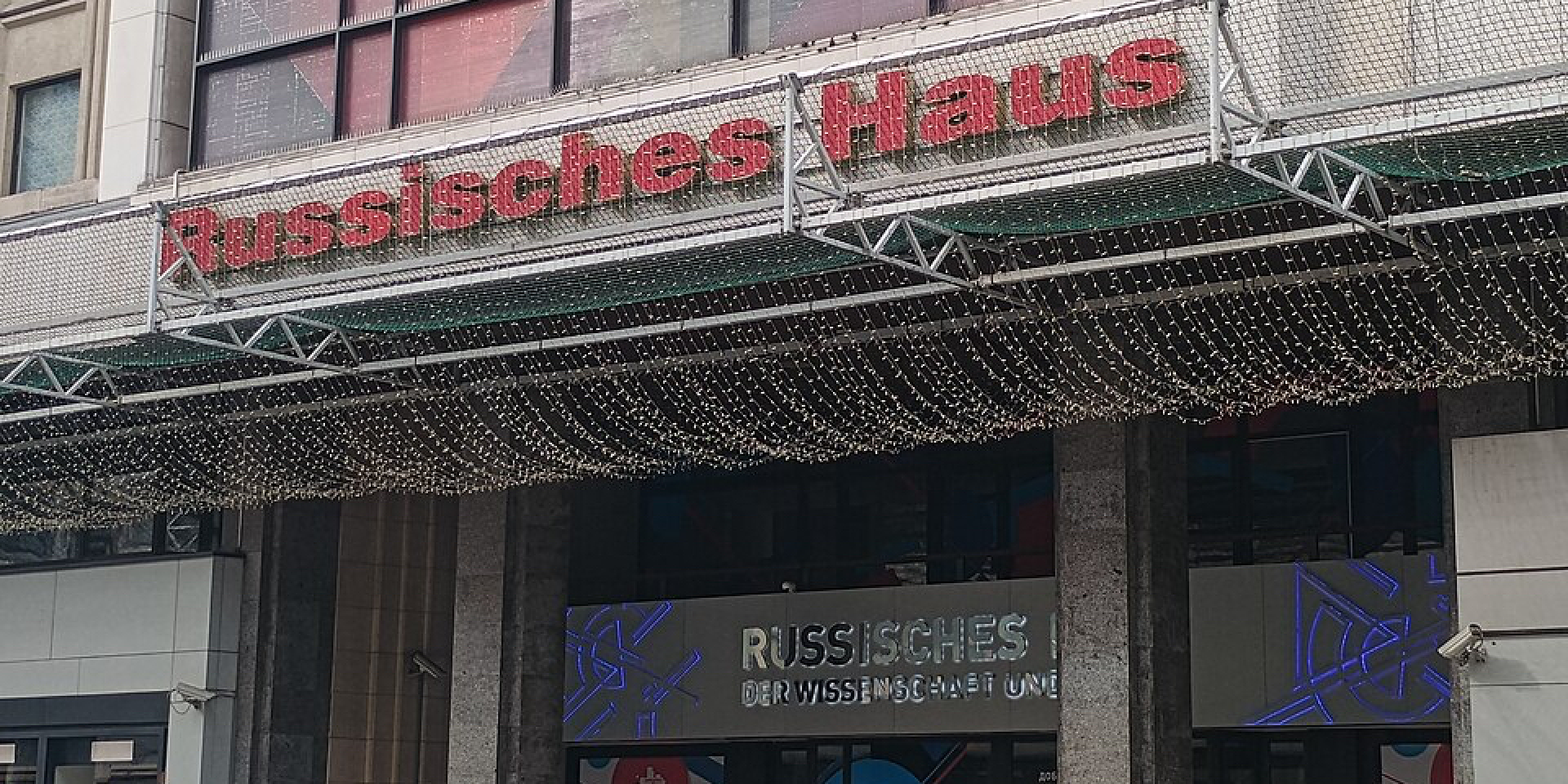
Germany shuts Russian House after years of Kremlin propaganda concerns (Photo: https://commons.wikimedia.org/wiki/User:RoyZuoMedia)
How the “Russian House” remained a symbol of Russia’s presence for forty-two years, despite sanctions, suspected ties to intelligence services, and Russia’s war against Ukraine.
A Soviet legacy with a Russian passport
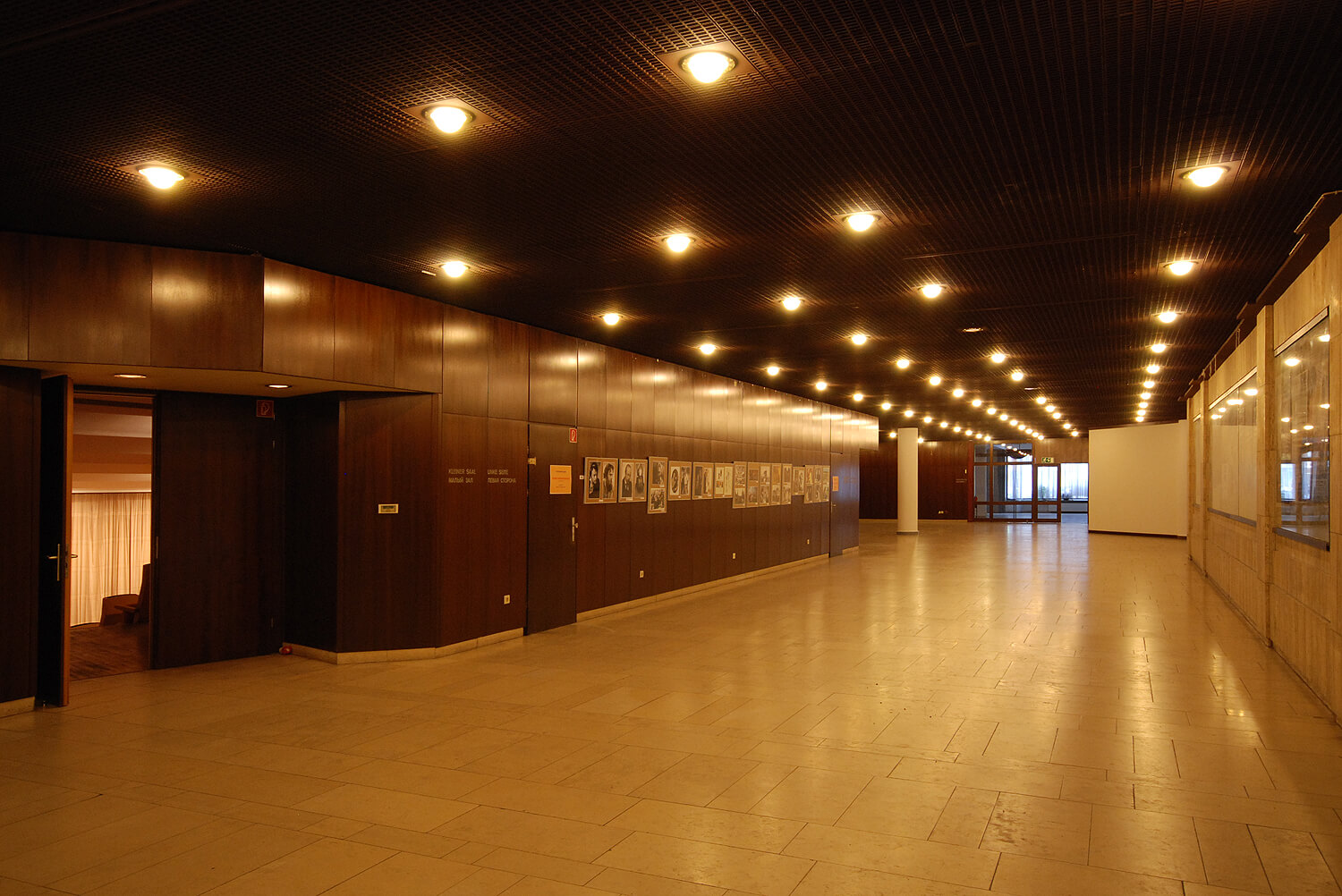
On July 5, 1984, the House of Soviet Science and Culture was ceremonially opened on Friedrichstrasse in what was then East Berlin. It was the largest institution of its kind outside the Soviet Union. The eight-storey concrete complex, covering almost 29,000 square metres, was designed by East German architect Karl-Ernst Swora. Inside were a vast 1,700-square-metre foyer, exhibition halls, several theatre spaces, 64 apartments and an inner courtyard. Visitors were greeted at the entrance by a statue of Lenin surrounded by palm trees.
When the Soviet Union collapsed, the building did not disappear. It was simply renamed. Thus emerged the “Russian House of Science and Culture,” which continued to operate according to the same logic, only now on behalf of the new Russia. It was managed by Rossotrudnichestvo, a state agency under Russia’s Ministry of Foreign Affairs responsible for promoting Russian culture and language abroad. The agreement governing its activities was signed during a period of naïve German optimism and ultimately became a legal trap for Berlin.
Forty years later, the building’s foyer looked almost identical to photographs from its opening day, except that Lenin’s statue had been replaced by a gigantic head of Yuri Gagarin. In 2026, exhibitions were still being held there, the “Samovar Courtyard” café was still operating, and the venue hosted up to four hundred events, ranging from ballet performances to anniversaries celebrating Russian artists.
The “Russian House” was financed through two channels: income from leasing commercial premises on Friedrichstrasse, including a jewellery store and an Escada boutique, and direct subsidies from Moscow which, according to Russian financial reports, amounted to millions of dollars.
Between ballet and propaganda
The turning point came in 2014, following the annexation of Crimea and the outbreak of war in eastern Ukraine. Anti-Western and anti-Ukrainian narratives became a routine part of the “Russian House” programme. That summer, Jürgen Elsässer, editor-in-chief of the Compact magazine, which was later banned in Germany, presented a collection of Putin’s speeches within the institution’s walls without any critical commentary. Some of his earlier events had been broadcast live by the Kremlin-backed channel Russia Today.
In November 2016, Andrei Zverev, the former head of the economic department at the Russian Embassy, held a conference on the development of Russian entrepreneurship at the Russian House and managed to invite Matthias Platzeck, the former Minister-President of Mecklenburg-Western Pomerania.
In 2018, Sergei Feoktistov, head of the German branch of the state media holding Russia Today, moved into one of the building’s apartments, while the holding itself, later placed on the European Union’s sanctions list, rented 400 square metres of office space there.
In March of the same year, a suspect in a high-profile case involving cocaine smuggled through diplomatic mail from Argentina was arrested in Brandenburg. At the time of his arrest, he was living at the Russian House, as was his sister’s company, which was implicated in the same scheme.
In October 2022, after the start of Russia’s full-scale invasion, the institution screened a film produced by the Russian state broadcaster RT titled Holocaust: Threads of Memory, which promoted a neo-Nazi narrative about Ukraine.
In the autumn of 2023, pro-Russian activist Olena Kolbasnikova and her partner gave a video interview in the building’s lobby alongside far-right politician André Poggenburg.
In 2024, an investigation by the German outlet CORRECTIV, conducted jointly with international partners, established a connection between the Russian House and the large-scale Juicy Fields fraud scheme. One of the organisers of the scam had been registered at the building’s address, although the official explanation was that this had been done “with fraudulent intent or through the use of forged documents.”
For years, Rossotrudnichestvo also provided a villa in Dresden, previously used by Soviet troops, free of charge to the German-Russian Cultural Institute, which offered similar advisory services to Russian citizens after Russia’s Consulate General in Leipzig was forced to close because of the war. In December 2025, the same Dresden villa announced an event entitled The Legal Status of Real Estate in the Part of Ukraine Controlled by Russia — essentially a legal consultation on purchasing property in the occupied territories.
The visible facade of an invisible network
The building’s sheer size, its numerous apartments and its multiple entrances from side streets make the Russian House an ideal location for clandestine activity. According to a CORRECTIV investigation, Russian Embassy diplomats — from advisers to secretaries — lived in the building at various times. This is consistent with Moscow’s long-established practice of sending intelligence officers abroad under diplomatic cover: all members of the military attaché’s staff at Russian embassies are officers of the GRU, while other departments employ career officers from the FSB and the Foreign Intelligence Service. Alongside officially accredited “residents,” there are also so-called illegal station chiefs who operate under diplomatic cover without formally acknowledging their affiliation with the intelligence services.
Activists and politicians had been raising the issue since 2022. The Ukrainian initiative Vitsche described the building as “a network of sanctioned actors, extremists and Russian intelligence officers” operating from this address. But the decisive piece of evidence came in a statement by the French Ministry of the Interior, published in early August 2026 as part of a deportation order concerning Russian citizen Ksenia Fedorova. Fedorova, the former head of the French branch of the propaganda channel RT France, had recently attempted to secure the vacant position of director of the Russian House.
German counterintelligence remained publicly cautious but had kept the building for years on its list of sites from which Russian intelligence services operate. An official involved in monitoring the site told CORRECTIV anonymously that the building had been under constant surveillance and that several Russian intelligence officers were permanently present there.
The European Union itself added Rossotrudnichestvo, the parent organisation of Russian Houses around the world, to its sanctions list in July 2022, describing the agency as a key instrument of the Kremlin’s hybrid influence and a long-standing umbrella organisation for a network of compatriots and agents of influence that also finances propaganda projects.
The legal trap of diplomatic status
One might have expected sanctions to bring the institution’s activities to a practical halt. In June 2025, the Munich Administrative Court ruled that the Russian House fell under the EU sanctions regime because it belonged to the Rossotrudnichestvo structure and could therefore engage only in activities necessary for the “maintenance of the building.” The Bundesbank was required to unfreeze funds exclusively for the payment of electricity bills — nothing more.
Yet by the end of 2025, its programme listed nineteen events and nine ongoing exhibitions, meaning that, on an annual basis, its level of activity differed little from the pre-war period.
The Berlin Public Prosecutor’s Office, which is conducting proceedings under Germany’s Foreign Trade and Payments Act, acknowledged in writing in March 2024 that it could not rule out the existence of a criminal offence. But the management of the Russian House enjoys diplomatic status, which shields it from criminal prosecution in Germany. Without a suspect who can be prosecuted, there can be no prosecution of the alleged crime.
Between Moscow and its own inaction
The fastest, most effective and most obvious instrument had always been the termination of the 2011 agreement itself, which, under its terms, could be reviewed every five years. Yet this was precisely the step the federal government had hesitated to take for years, even as Moldova, the United Kingdom, Denmark, Poland and Azerbaijan had already closed their own Russian Houses.
The explanation lay in the desire to preserve the work of the Goethe-Institut in Moscow and St Petersburg as one of the few remaining forms of German presence in Russia, despite the fact that the activities of these institutes had been “significantly impeded” since 2022, according to the German Foreign Ministry itself.
In a January 2026 response to an inquiry from Green Party MP Robin Wagener, the ministry acknowledged that it continued to support contacts with civil society in Russia, “even if the possibilities for such support are becoming increasingly limited due to domestic repression.”
This caution appeared increasingly strange against the backdrop of Russia itself declaring a growing number of German organisations “undesirable” or even “extremist.” The German Association for East European Studies and the Centre for East European and International Studies lost the ability to operate in Russia, while their Russian partners risked persecution merely for maintaining contact with them.
The asymmetry was obvious: while Moscow methodically pushed German institutions out of its territory, Berlin continued to pay for the maintenance of a building in the very centre of its own capital, including an annual land tax of €70,000, which the federal government never suspended.
The day the war knocked on Germany’s door
The turning point came with an incident on the night of August 4, 2026, when an explosive-equipped drone was discovered at Leipzig/Halle Airport near Ukrainian cargo aircraft. According to CORRECTIV, the attack involved professionals rather than amateurs.
The incident fit into a broader pattern. According to estimates by authorities in Germany’s federal states, more than one hundred cases involving drone flights and acts of sabotage suspected of having Russian involvement had been recorded over the previous year, including repeated incidents near the NATO air base in Ramstein.
On September 1, 2026, Interior Minister Alexander Dobrindt and Foreign Minister Johann Wadephul officially attributed responsibility for the attack to Russia on behalf of the federal government. The decision was taken following consultations in the National Security Council and the federal cabinet. Earlier, Chancellor Friedrich Merz had stated that those responsible for the attack “would pay for it.”
One of the measures in the resulting package — which also included the closure of Russia’s Consulate General in Bonn, the expulsion of diplomats, tighter entry controls and tougher measures against the so-called shadow fleet — was the termination of the agreement governing the Russian House.
Wadephul announced that the 2011 agreement on the operation of cultural centres would be denounced. Formally, it will cease to be in force on June 7, 2027, and the institution must be completely closed by that date. The future of the complex, which remains the property of the Russian state and occupies one of the most valuable plots of land in central Berlin, now promises to become a political story in its own right.
What remains behind the scenes
The story of the Russian House in Berlin is not merely the chronicle of a single cultural centre. It is the story of how a democratic state spent years trying to maintain a balance between the principle of reciprocity in international relations and the growing realisation that its partner was clearly no longer playing by the same rules.
It is also a story about the limits of legal instruments in confronting hybrid threats: when diplomatic immunity, the status of a cultural institution and international agreements signed in a different historical era become a shield for activities that have long since moved beyond the realm of culture.
For forty-two years, the building on Friedrichstrasse symbolised first the Soviet and then the Russian presence in the very heart of Berlin. It has now become a symbol of how long Western democracies are capable of postponing obvious decisions — until another tragedy turns further delay into a political catastrophe.
The military war may be swinging in our favor, but the information war continues.
Just as an army needs soldiers, so does a free society need its journalists to ensure that people have access to honest, trustworthy voices to understand the world around them.
For the past five years, The New Voice of Ukraine has been working tirelessly to push back against Russian narratives and defend democracy. But we cannot do it alone.
Please consider supporting us on Patreon for just $5 a month – your donation does directly to supporting journalists and ensuring that this front of the infowar says solid and defended.
Thank you.
Follow us on Twitter, Facebook and Google News
