

Old machines, new missions: Ukraine's helicopter crews adapt
In the frigid morning of February 12, 2025, near an undisclosed location in Ukraine, a Mi-8 helicopter descended onto a makeshift landing zone. The crew, part of the 16th Separate Army Aviation Brigade from Brody, had just returned from a mission targeting Russian positions in the Donbas region. Pilots Yurii and Pavlo, both 24, shared their experiences operating the aging Mi-8 helicopters under constant threat from Russian air defenses.
NV: So is it flying weather today?
Yaroslav Tyravskyi, press officer for the brigade, smiled: "Looks like it."
He then walked off briskly, pointing out the landing zone.
Noticing our photographer preparing to shoot the full panorama, Tyravskyi politely asked us not to do so—concerned that Russia could geolocate the base from the photo.
The icy wind across the open field stung our skin. But soon another sound cut through the air: the distinct rattle of rotor blades. Suddenly, the wind shifted—blowing straight down as a camouflaged Soviet-era Mi-8 buzzed low overhead, its crew waving cheerfully from above.
The massive bird hovered briefly, then descended, kicking up a thick swirl of dust. Once on the ground, the rotors slowed and eventually stopped. Crew members—pilots and flight engineers in olive jumpsuits and black helmets—jumped out of the cabin, its door painted with a blue-and-yellow Ukrainian flag.
NV: There's a plush cow toy in the nose of your helicopter. A good-luck charm?
Flight engineer (unnamed): That’s the Mi-8’s unofficial nickname—“the cow.” One of our crew brought that stuffed cow from home, from his kid. It’s our lucky charm now. A battle cow.
Two 24-year-old Mi-8 pilots, Yuriy and Pavlo, invited NV aboard for a quick tour.
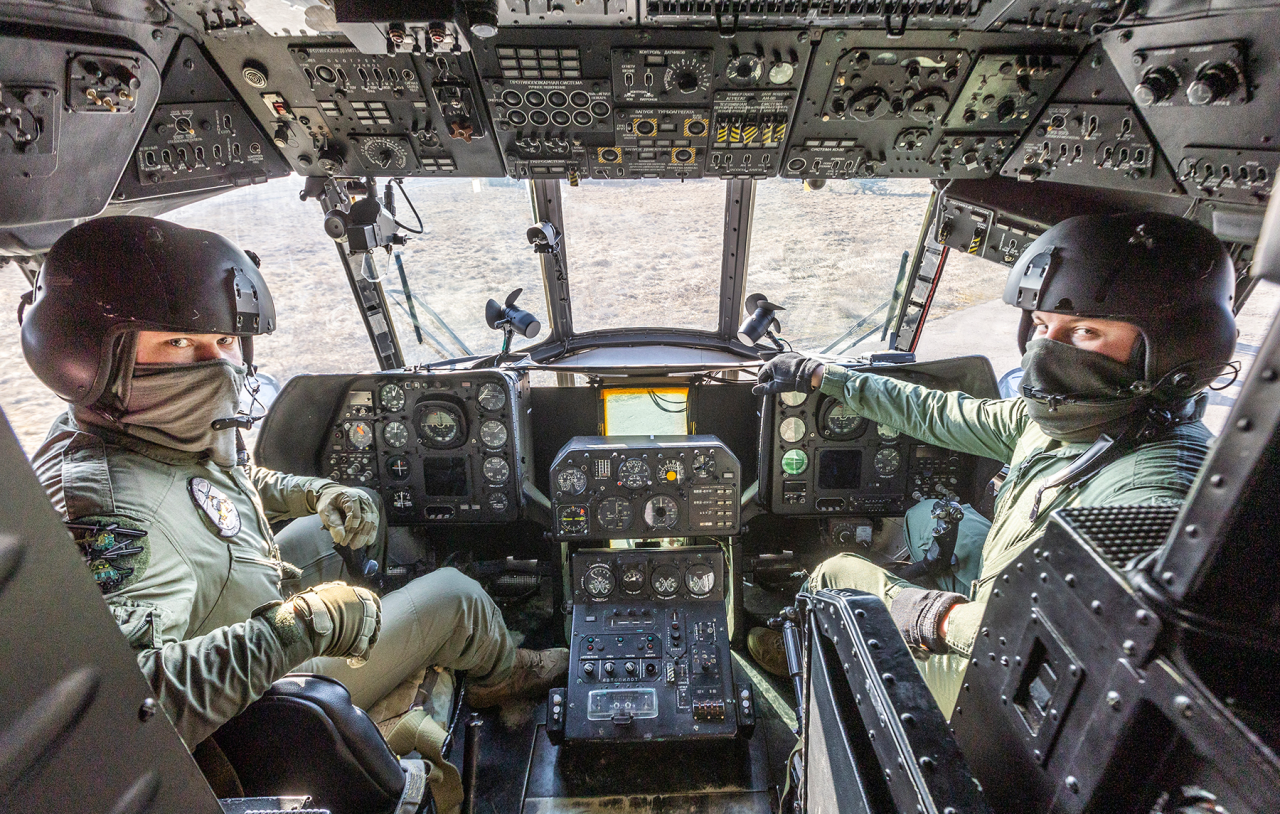
Inside, the aircraft felt spacious—gray walls, benches along the sides, and parachutes for the crew stashed inside.
NV: How do you evacuate the wounded in this space?
Yuriy: We can fit 12 stretchers in here.
Still, they no longer fly as many medevac or troop-insertion missions as they did early in the full-scale invasion. Today, their main task is something else.
Yuriy: Our job now is direct strikes—destroying Russian personnel and armor.
On Yuriy’s right shoulder was a patch: “We go where we’re needed.” That’s the motto of army aviation.
Unlike the Ukrainian Air Force, which operates fixed-wing fighters and bombers at longer ranges, army aviation is helicopter-based, operating close to the front lines to support infantry from the air.
Yuriy: Our helicopter can land anywhere—in a field or on a road. You need a runway for a fighter jet.
Living and flying among missiles
Both pilots entered service recently, right around the start of Russia’s full-scale invasion. Yuriy graduated from the Kharkiv National Air Force University in 2021; Pavlo in 2022. Their first combat flights came immediately.
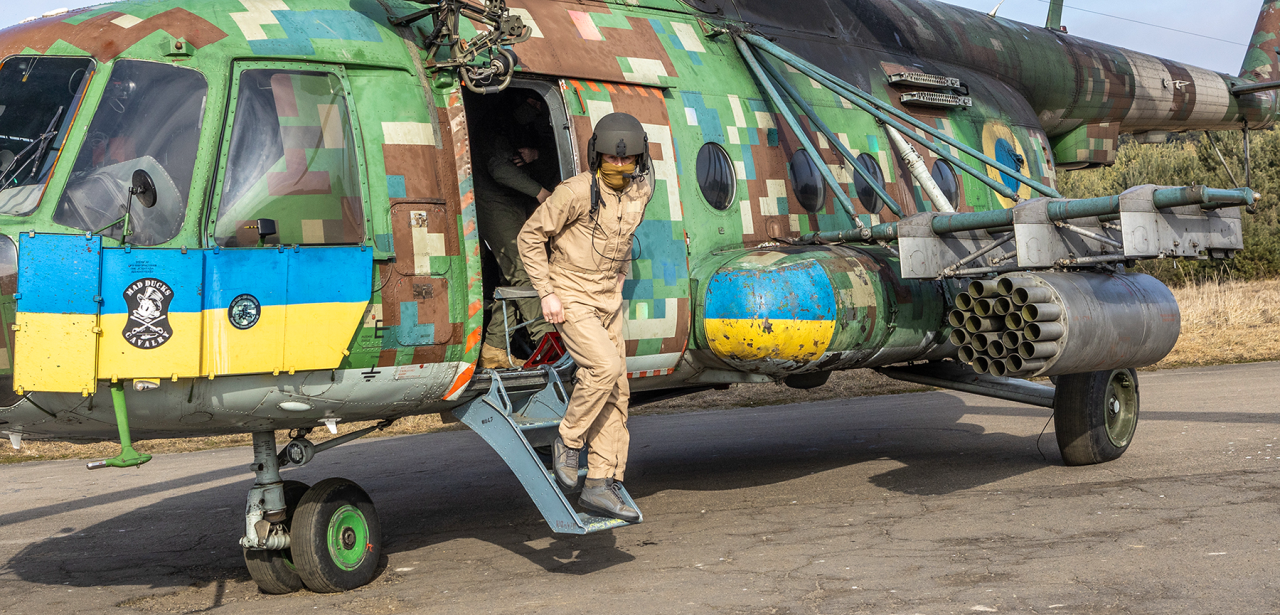
Yuriy: I’ve dreamed of being a pilot since I was a kid. There was a helicopter base near my village, and I’d wave at them from my yard.
Now it’s Yuriy who gets waves from kids in front-line towns.
Yuriy: Once near Kharkiv, some kids ran out of a house waving a tiny flag. When our unit rotated out, we dropped them a box of candy with a note: “Thank you for waving at us.”
The support from infantry soldiers on the ground is just as important.
Yuriy: After we hit enemy targets, the guys on the ground tell us they’re grateful. It keeps morale up—they know we haven’t forgotten them.
Pavlo: It’s a real boost. It matters.
Pavlo recalled his first combat sortie in Kharkiv Oblast in 2023.
Pavlo: There was fear. You don’t know what’s coming. And then, missiles started flying at us. I thought it was the end. But everyone did their job, and we made it out.
NV: What was the mission?
Pavlo: We hit enemy strongholds and armor. The missiles came as we were flying back.
The Mi-8 crew escaped. But today, things are much tougher.
Pavlo: Russians are using more jets against us, more air defenses, and drones too. During missions, we hit a maneuver point—and often, enemy drones are tracking us, trying to shoot us down.
Now, beyond the standard three-person crew—commander, copilot, and engineer—they often bring a door gunner, whose job is to scan for drones and shoot them down if needed.
Pavlo: Russians, like us, are learning on the battlefield. They’re always trying to take us out.
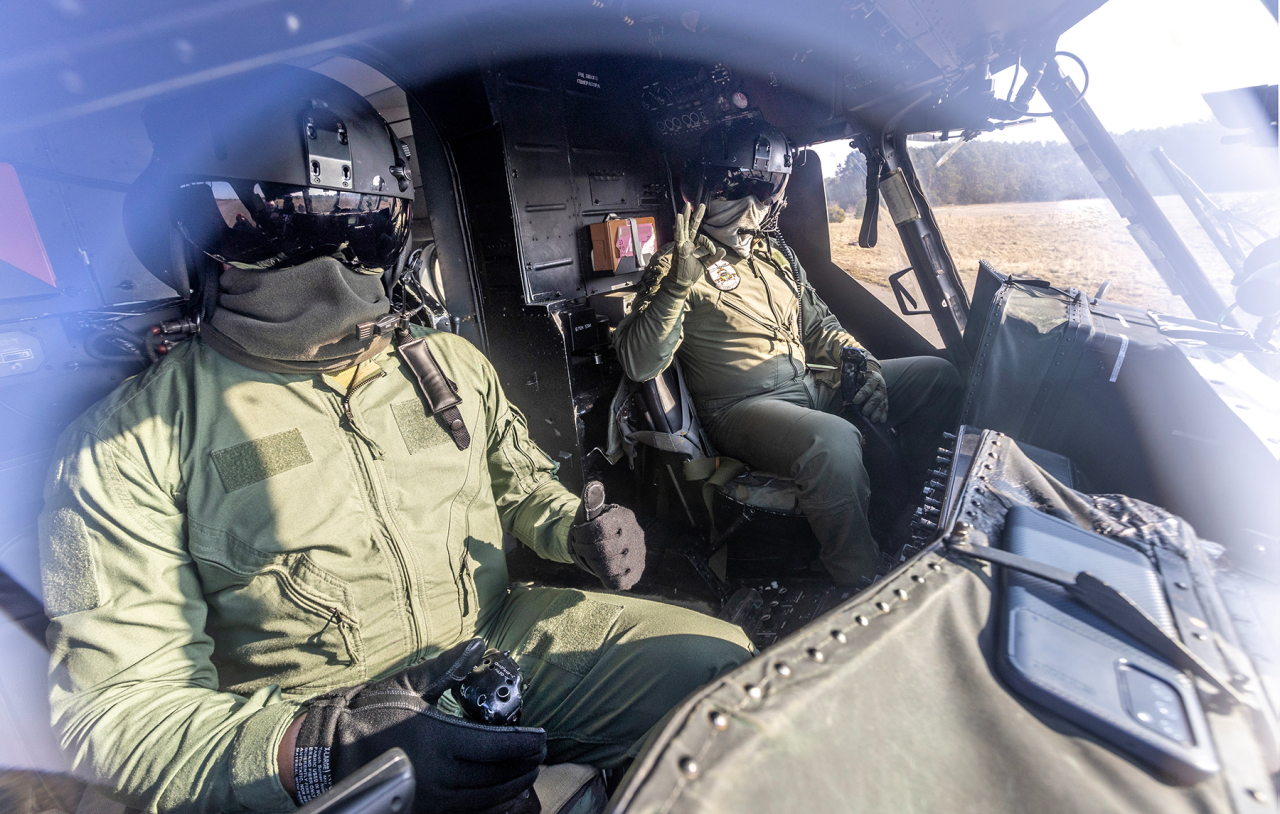
Yuriy: The toughest missions were over Donetsk. Once we got to the launch point and they fired at us. We don’t have systems to detect launches—just radio alerts from the ground. We pulled out fast and avoided a hit.
Their main protection is heat flares—infrared countermeasures.
Yuriy: As we leave the launch zone, the copilot or engineer hits the button. The flares go off and confuse enemy missiles.
A legacy from the Soviet Union
Volodymyr, the flight engineer—short, blue-eyed, and a 15-year veteran—spoke near the aircraft.
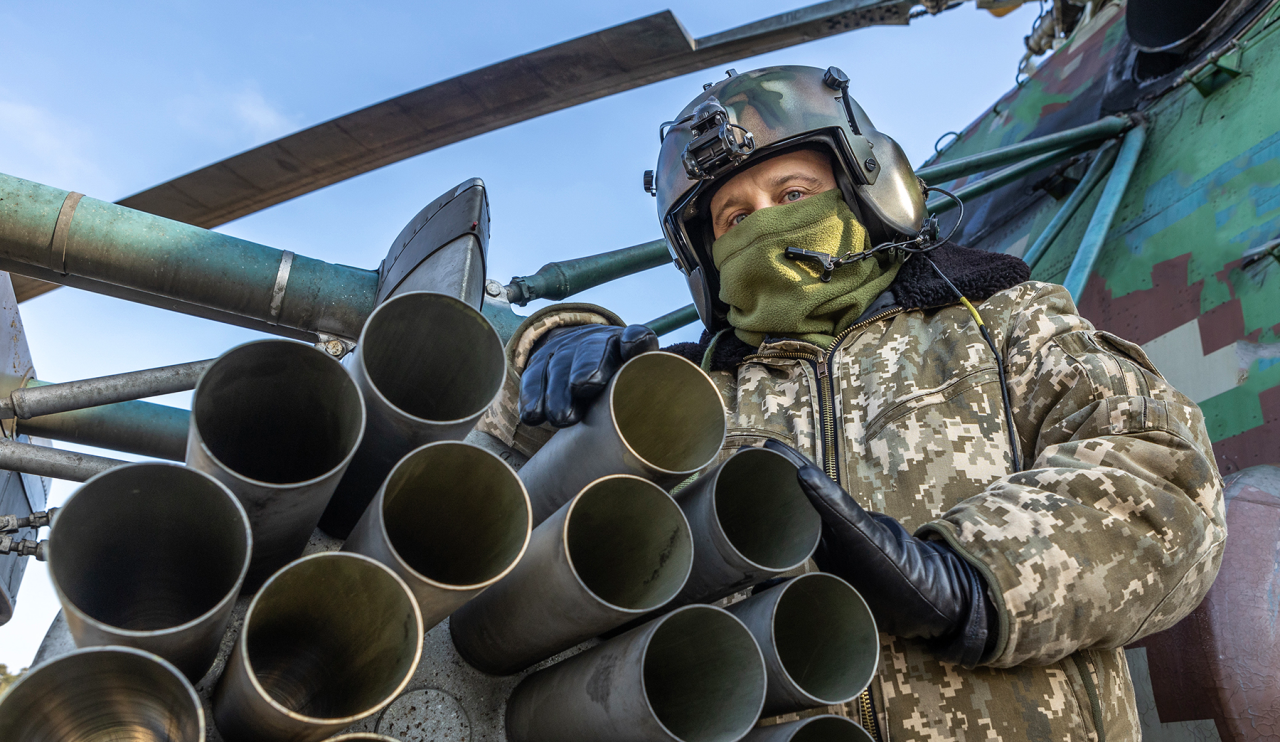
Volodymyr: The Mi-8 was built for medevacs and troop drops. The Mi-24 I usually work on was strictly for combat. But today, both carry out attack missions.
He pointed to rocket pods mounted under the Mi-8.
Volodymyr: It can carry up to six of these—three on each side. Each holds 20 rockets. We load depending on the mission.
His job is to keep the helicopter working—on the ground and in the air.
Volodymyr: This is all Soviet gear. Mi-8s from the 1960s. Mi-24s from the ‘80s or ‘90s.
NV: What kind of choppers would you prefer?
Volodymyr: We need to upgrade the fleet. The old ones are wearing down. If we could get anything, maybe Apaches. They're more maneuverable, with better electronics. You don’t need paper maps or manual targeting—computers do it.
Pavlo: The Apache also has more accurate weapons and better armor. That’s why we want to switch to something newer.
Another upgrade they’d love is the American Black Hawk.
So far, no official plans exist for switching to those models. Ukraine has only received a handful of Mi-24s from North Macedonia and the Czech Republic.
Volodymyr: We keep the old ones running. Sometimes there's metal corrosion—we send the chopper to a plant for repairs.
NV: What’s been hardest during the war?
Volodymyr: Not the missions. That’s like training—take off, shoot, come back. It’s the emotional side that’s tough.
He laughed softly.
NV: What exactly was difficult?
Volodymyr: When they started shooting our guys down in the early days.
NV: What did the peacekeeping mission in Congo give you?
Volodymyr: Experience. Before that, we only flew a few times a year. Now, the younger guys are gaining experience... just not the way we’d hoped. I wish they could be learning in a peaceful country.
And with that, NV’s time with the helicopter crew came to an end.
The military war may be swinging in our favor, but the information war continues.
Just as an army needs soldiers, so does a free society need its journalists to ensure that people have access to honest, trustworthy voices to understand the world around them.
For the past five years, The New Voice of Ukraine has been working tirelessly to push back against Russian narratives and defend democracy. But we cannot do it alone.
Please consider supporting us on Patreon for just $5 a month – your donation does directly to supporting journalists and ensuring that this front of the infowar says solid and defended.
Thank you.
Follow us on Twitter, Facebook and Google News
