


Two defense industries in one pavilion: What I saw at Eurosatory
 Read NV on Google
When two business cultures end up in neighboring halls, the
difference is hard to miss.
An interceptor drone flies. It catches up with a target,
hits it, and the target falls. The foreign founder plays the video on a loop at
his booth. He is visibly proud, and he has reason to be: He is presenting an
elegant solution.
But the questions come quickly.
I ask the first one right away: Why does your target simply
fall? We are used to a different picture, where an interception ends with an
explosion. The founder is happy to explain: Our interceptor has no warhead. It
knocks down a drone mechanically, without detonation.
Fine. But what if the drone you just shot down is carrying a
warhead of its own? Then it falls — onto a city, a building, people.
And I see the founder freeze. It seems he simply had not
thought about that.
I went to Eurosatory 2026 to look at the market — who is
selling what, to whom and for how much. I came back with something else entirely.
Because the main thing I saw there was not weapons. Under one roof stood two
defense industries that live by opposite rules and barely understand each
other. One of them is Ukrainian. And as strange as it may sound for a
country in its 12th year of war, it is the one behaving like a normal market. I
will explain why I think that matters beyond the defense industry.
This year, Eurosatory broke its own records: more than 2,600
companies, 185,000 square meters and delegations from nearly 100 countries.
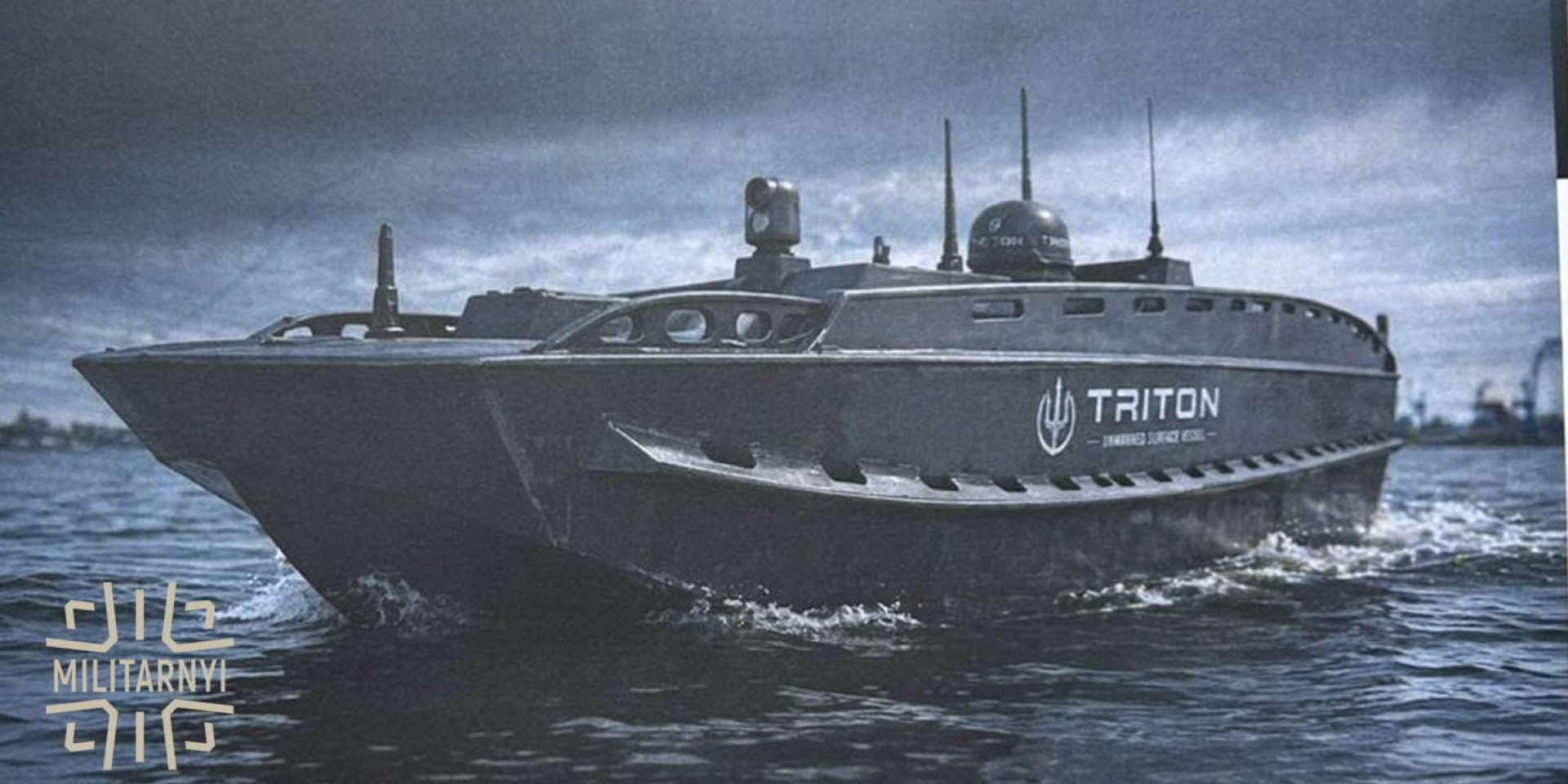
Ukraine’s pavilion grew from five companies in 2024 to more than 80.
I spoke with our manufacturers, and almost all of them said
the same thing: It is great that we are here. They were happy because many were
exhibiting abroad for the first time, at a major venue. Foreign delegations
came up to them, examined their products and got to know them.
Then I asked an uncomfortable question: Will this affect
sales? Usually there was a pause, followed by an honest “well ... we don’t
know.” No one promised themselves contracts or pretended the trip would sell
anything by itself.
I liked that uncertainty more than any upbeat report. Behind
it is the right market instinct. A Ukrainian manufacturer thinks like a
market player: looking for a customer, a partner, the next step, while
understanding that none of it is guaranteed. This is the normal anxiety of a
normal business that lives on sales, not subsidies.
There, at Eurosatory, stood foreign companies that, in
effect, do not need customers.
I did not understand this right away. You walk past a booth
— meetings are being scheduled, catalogs are being handed out, all the usual
trade-show machinery is there. But once you start asking questions, it turns
out the company has one contract. With its own government. For the next 10
years. Roughly speaking, for one component for one vehicle. The company is not
looking for new customers or partners. It is not looking for anything at all.
It came simply to be seen at Eurosatory.
There were hundreds of representatives like that: uncorking
champagne and wine at their booths as soon as the clock hit 2 p.m., or
gathering their things and heading off on tours of Paris with friends and
colleagues. Their presence there is a report for the marketing team, investors
and management. It is definitely not about finding new money or technology.
For part of the European market, where the industry has
lived for decades on government orders, this is simply a different model. Your
goal is not to find 10 customers. It is to secure one big government contract
that solves the problem of stability for years. After that, the exhibition can
become an annual ritual. The biggest players do exactly that: set up a booth,
hold the required meetings and quietly begin winding down by lunchtime.
I am not saying this is bad. I am saying it is a
different game. And when these two models end up in neighboring halls, the
difference is hard to miss.
One of these models has a side effect worth spelling out.
When the market does not pressure you, the product gradually stops being tested
against reality. The scene with the interceptor drone is the best illustration
of a whole layer of manufacturers. It is a good engineering solution that no
one checked against a simple question: What happens in real combat, in a real
city, with real consequences?
The point is not that the engineers are bad. It is that no
one has ever forced them to think about it. In their model, a government
contract stands between the product and reality — not the enemy.
As a specialist working in intelligence, I have repeatedly
had the chance to speak with intelligence analysts at major defense companies.
My interest was simple: What do they do differently? That discovery became one
of my most important professional insights. For them, intelligence means
software, analytical reports from the Defense Ministry and the competitive
advantages of certain components — nothing more. Unfortunately.
They entrust this function solely to the state and do not
want to develop the in-house expertise to do it themselves. Reflecting on those
conversations, I identified the core problem in that approach: reliance on a
single source. And that is a very risky path.
I am not an arms maker, and I will not pretend to judge
which drone is better. That is not my expertise, and that is not what this
piece is about. I am interested in the market and how its players behave. And
their behavior showed one simple thing.
Ukraine’s defense industry has been hardened precisely by
what it lacks: guarantees. We do not have a 10-year contract that lets us
breathe easy. Every product is tested every day by the harshest customer in the
world: an enemy that will either prove it works or prove it does not. It is a
brutal school. But it creates a reflex that no government order can buy: asking
“does it actually work?” before asking “does it look good at the booth?”
And that, to me, is an underrated Ukrainian export. Not only
drones and platforms, but the habit of proving yourself every day. Europe now
urgently wants to learn Ukrainian speed. It would be good if, along with speed,
it adopted that habit as well.
For now, two defense industries stood side by side at
Eurosatory and did not really understand each other. I walked between them and
thought that one of these pavilions would someday be written about in
textbooks. And it is definitely not the one that packed up by lunchtime.
The military war may be swinging in our favor, but the information war continues.
Just as an army needs soldiers, so does a free society need its journalists to ensure that people have access to honest, trustworthy voices to understand the world around them.
For the past five years, The New Voice of Ukraine has been working tirelessly to push back against Russian narratives and defend democracy. But we cannot do it alone.
Please consider supporting us on Patreon for just $5 a month – your donation does directly to supporting journalists and ensuring that this front of the infowar says solid and defended.
Thank you.
Follow us on Twitter, Facebook and Google News
