

MP Bobrovska warns army tensions are rising as Syrskyi loses public support
 Read NV on Google
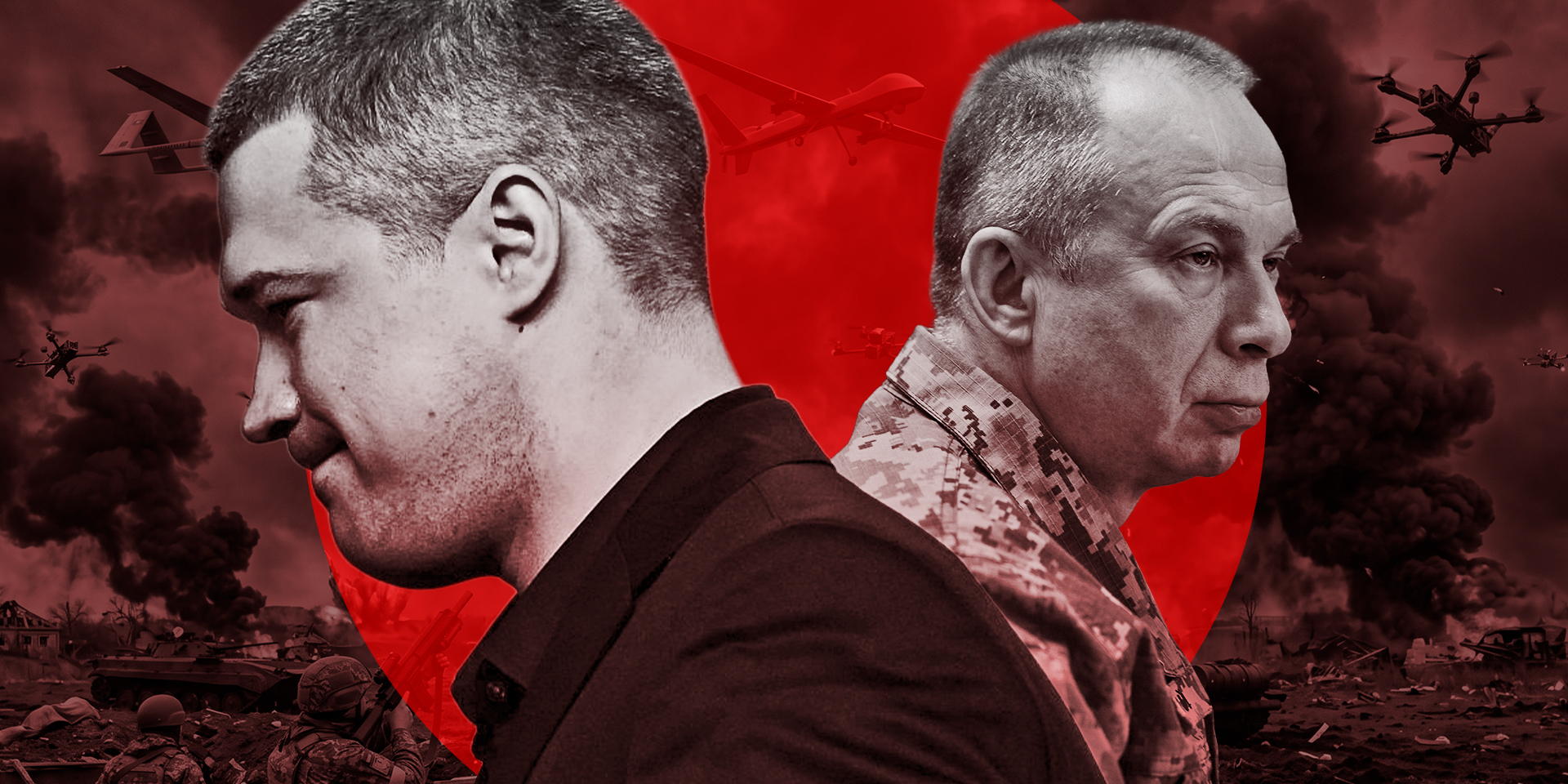
Few posts remain for Fedorov as Syrskyi becomes toxic, says Bobrovska (Photo: Ukrainian Presidential Press Service via Reuters, John Thys / AFP via Getty Images, collage by NV)
Solomiia Bobrovska, a member of parliament’s Committee on
National Security, Defense and Intelligence, spoke to Radio NV about the consequences
of President Volodymyr Zelenskyy’s personnel decisions at the Defense Ministry,
a possible future role for Mykhailo Fedorov and the future of Armed Forces
Commander-in-Chief Oleksandr Syrskyi, whom she says is becoming toxic.
— What decisions do you personally expect from the
president?
— First, as I understand it, we are waiting either for a new
position for Mykhailo Fedorov or for him to return to his old one. Second,
there is the question of a new commander-in-chief. It seems plain as day that
such a decision is being prepared and discussed.
I am not entirely comfortable with harsh attacks on any
commander-in-chief, regardless of who holds the post. But tearing up
commendations and throwing away medals issued under the commander-in-chief’s
signature crosses every reasonable line. We are not fighting for the
commander-in-chief as an individual, and he is not the one who personally gives
out the awards. This is a matter of...
— I had not seen that. Did someone tear up their awards?
— Yes. Commendations and awards have already been torn up. I
believe emotions have gone too far. These are very troubling trends, and they
need to be addressed.
— Serhii Sternenko, Fedorov’s former adviser, and others
recently circulated reports alleging that service members were being ordered to
record videos in support of Syrskyi. Are you aware of such cases?
— I have heard of such cases. This pattern is not new, and
it will remain with us for years. It reflects the level of communication in our
Armed Forces and among their command structures.
I also want to remind you that this was not only about
recording videos. There was also a ban on attending political rallies, which is
understandable. That prohibition has existed for a long time. It is contained
in both the law and military regulations requiring political neutrality. We
often demand that neutrality from every commander, I should remind you.
But yes, I heard about the videos. To me, this is the Armed
Forces’ usual primitive approach to communications. There is absolutely nothing
new about it.
They have once again paid the price because emotions are off
the charts. Strategic and political tasks cannot simply be pushed down the
chain of command and handled this way. They cannot be solved so crudely.
At some point, the army has to understand which tasks are
best handled in a military fashion — where that is its strength — and where it
is weak, particularly in communications.
— Are you prepared to name any potential successors to
Syrskyi?
— No, I am not, and I will not play that game. I am not
going to read tea leaves to guess who is more closely aligned with Zelenskyy
and his requirements. I do not even want to discuss it because there is no
point.
— Some argue that Syrskyi is one of Ukraine’s most
experienced generals and that he has a talent for maintaining a balance among
different factions in the military, making him the best person for the job.
Those arguments naturally came from his defenders. How accurate are they? Is
Syrskyi really so irreplaceable?
— Let us be honest. From the moment Syrskyi took office,
there was an immediate split between Zaluzhnyi’s team and Syrskyi’s. People
close to Valerii Zaluzhnyi were pushed out. There was enormous turnover among
the heads of operational commands, sector commanders and brigade commanders.
We remember what happened to people who spoke publicly or
commented on the situation at the front, in their military units and elsewhere.
There was a great deal of dissatisfaction.
Today’s events are the culmination of those emotions. Still,
I find it strange that there was not as much outrage when Skelia, the 155th
Brigade and the Assault Forces were already being discussed publicly.
Syrskyi is becoming toxic. We all understand that, and we
need to call things what they are.
But I am convinced that appeals from lawmakers or public
demands voiced on the Maidan are neither an appropriate nor a normal way to
replace the commander-in-chief. We are confusing our respective areas of
authority and influence.
I am a staunch supporter of protests and the Maidan, and I
consider them a Ukrainian expression of democracy. But everything has its
limits and red lines. The Armed Forces are built on discipline, order and
military service. Applying the rules of civil society to military service is
wrong. Otherwise, the front will not stop at Mukachevo — we could end up
fighting in Slovakia or Poland.
Returning to the commander-in-chief, his time has passed. It
is time for changes and rotations. The military has been saying this, too — not
publicly, but these conversations have been circulating internally. Now that he
also faces such deep public disapproval outside the military, it is an entirely
different matter.
— To sum up the question of replacing him, are you
convinced that there are candidates to choose from? If the president wants to
make a change, will he find a worthy replacement? Is that what you mean?
— Of course. First, no one is irreplaceable. That is an
axiom.
Second, over more than three years of full-scale war, we
have produced an enormous number of highly professional and effective people.
They include career service members who entered the army as lieutenants and are
now lieutenant colonels or brigadier generals. They also include people who
came in as civilians and rose to significant positions.
There is a blend of the old school and the new school, along
with an entirely new generation of commanders. There are new, young leaders
across the branches and services, as well as unconventional command structures.
The war has produced many outstanding leaders. Just give them a chance to prove
themselves.
But again, the military is built on unity of command. Give
people who could become commanders, including commander-in-chief, an opportunity
to show what they can do.
— I want to return to Zelenskyy’s statement that he was
tired of the conflict between Syrskyi and Fedorov and had decided to end their
confrontation. Many people were left with the impression that Zelenskyy chose
the past over the future and Soviet-style methods over progressive reforms. Do
you agree? How do you explain the president’s choice? Many people have argued
that dismissing both would have been fair. Why do you think he dismissed
Fedorov but kept Syrskyi?
— First, I opposed Fedorov’s dismissal and, before that, the
dismissal of his predecessor, Denys Shmyhal, because no one can deliver results
in six months inside the behemoth called the Defense Ministry, which absorbed
the Strategic Industries Ministry. It covers everything from production and
underwear to contracts and mobilization — one enormous machine, a giant
ministry.
I deeply regret that people did not protest Shmyhal’s
dismissal because he was bringing everything under control and restoring order
after the breakdown under Rustem Umerov.
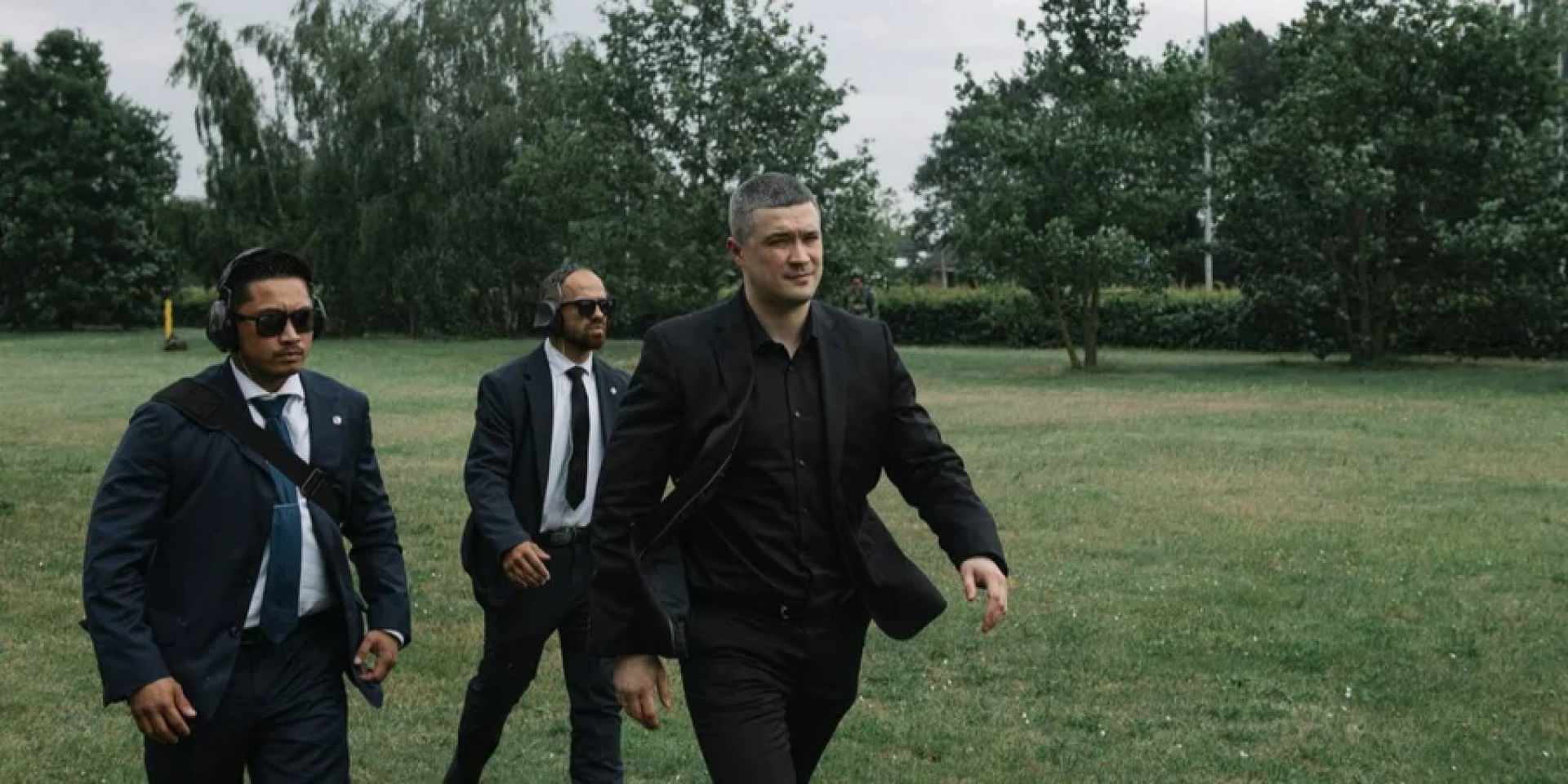
Second, I believe business lobbying played an enormous role
in Fedorov’s dismissal. That is my position. It was also a major source of
friction between the commander-in-chief and the minister.
I am more than convinced that the president could have
forced them to find common ground by making firm decisions himself. This would
have applied to contracts, terms of service, policy on AWOL cases and draft
evasion, and reform of territorial recruitment and social support centers, Ukraine’s
military draft offices.
These three people — the supreme commander-in-chief, the
commander-in-chief and the defense minister — needed a shared policy position.
This is about making and implementing policy, and they cannot move forward
without one another. That is my position.
But appointing someone for six months, when we are
effectively heading toward a seventh defense minister during Zelenskyy’s
presidency, is simply a mockery. This is not strategic governance at the state
level. I do not even know what diplomatic term to use for it.
Listen, soldiers stay in their positions longer than our
ministers stay in office. Someone could rotate into a position under Rustem and
rotate out under Khmara. Is that normal?
— How do you interpret Zelenskyy’s choice? Why did he
choose Syrskyi between the two? At least for now, since everything could still
change.
— I do not think he chose. I think he has drawn the decision
out over time. That is my assumption.
— So you believe the original intention was to dismiss
both?
— No. I think people close to the president initially began
telling him that it was time to remove Fedorov for several reasons. Some people
did not like the procurement decisions. Others whispered to him about the
conflict with Syrskyi.
I believe the decision was made without being properly
thought through. The news was announced on a Sunday and came out of the blue.
There was no candidate for defense minister, mobilization was offered as the
sole justification, and there was also no replacement for the
commander-in-chief.
Those are two inseparable links in the same chain. They
cannot function while in conflict, but neither can function without the other.
Then Thursday came, and it turned out that the president was
not ready with either decision. He had to improvise and stagger the decisions
over time. That is how I see it.
But in my view, the mistake was made at the outset, with the
announcement on Sunday that the government would be dismissed. The government
could change, but the defense minister should have remained in place.
— You said at the beginning that Fedorov should return
either to his old post or take a new one. So far, the discussion has focused on
a new position as coordinator for new military technologies. We have not heard
the president express any intention of returning Fedorov to the Defense
Ministry. Do you consider that a realistic prospect?
— I do not think it is very realistic. But the president
said clearly the day before that he hears the people in the streets and is
holding talks.
Where could Mykhailo be most effective? At this point, an
adviser post would be meaningless. An aide post would be meaningless. His only
alternative would be to enter the military system, become a service member and
work within it.
Otherwise, it simply will not work without the authority of
the defense minister. Very few posts remain in the current setup. Even to serve
in a command role, you must be a service member rather than a civilian and hold
a military rank.
The military war may be swinging in our favor, but the information war continues.
Just as an army needs soldiers, so does a free society need its journalists to ensure that people have access to honest, trustworthy voices to understand the world around them.
For the past five years, The New Voice of Ukraine has been working tirelessly to push back against Russian narratives and defend democracy. But we cannot do it alone.
Please consider supporting us on Patreon for just $5 a month – your donation does directly to supporting journalists and ensuring that this front of the infowar says solid and defended.
Thank you.
Follow us on Twitter, Facebook and Google News
