

Cobweb operation forces Kremlin to retreat its strategic fleet — OSINT analysts
Moscow has relocated a significant portion of its strategic aviation fleet to relatively safer airfields in its Far East after Ukraine's Cobweb operation, open-source intelligence (OSINT) analysts at AviVector project reported on June 11.
Seven Tu‑160s were transferred from Irkutsk Oblast to Anadyr (Chukotka), Yelizovo (Kamchatka), and Kazan, while eleven Tu‑22M3s - to Ukrainka airbase in Amur Oblast. Additional Tu‑95MS bombers were moved from Engels Air Base to similar Far Eastern locations.
Satellite imagery confirms that by midweek, all bombers departed Olenya airbase in Murmansk Oblast and seven Tu‑160s had also been removed from the Belaya airbase.
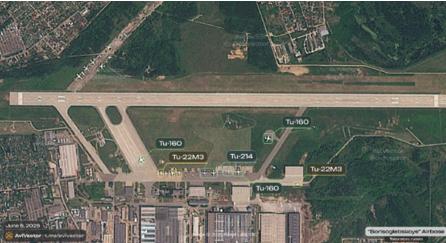
The relocation follows heavy losses during the drone strike: open sources confirm that at least 10–15 strategic aircraft — including Tu‑95s, Tu‑22M3s, and Tu‑160s — were destroyed or damaged, representing around 10% of Russia’s entire long-range bomber fleet.
Experts noted that Russia cannot easily replace these losses, as production of these aircraft ceased in 1991, and sanctions make large-scale restoration impossible. As a result, Moscow is now relying more heavily on the rare and maintenance-intensive Tu‑160s to fill the gap left by the damaged Tu‑95s.
This redeployment is seen as a tactical response to a Ukrainian strike that exposed Russia’s airbases vulnerability and reduced its capacity to carry out large-scale bombing raids on Ukrainian cities. Moving assets to remote bases may reduce the risk of further attacks — but it also signals a new phase in Ukraine’s strategic pressure campaign against Russia’s long-range aviation.
Cobweb operation
On June 1, Ukraine’s Security Service (SBU) carried out bold Cobweb Operation - a large-scale strike targeting Russian strategic bombers.
On June 2, the SBU confirmed that four airfields deep in Russian territory were hit simultaneously, resulting in damage to 41 aircraft, including A-50s, Tu‑95s, Tu‑22M3s, and Tu‑160s.
Ukrainian drones struck:
-
Olenya (Murmansk Oblast)
-
Belaya (Irkutsk Oblast)
-
Dyagilevo (Ryazan Oblast)
-
Ivanovo (Ivanovo Oblast).
The strike on Belaya airfield marked Ukraine’s first attack on a target in Siberia since the start of the war.
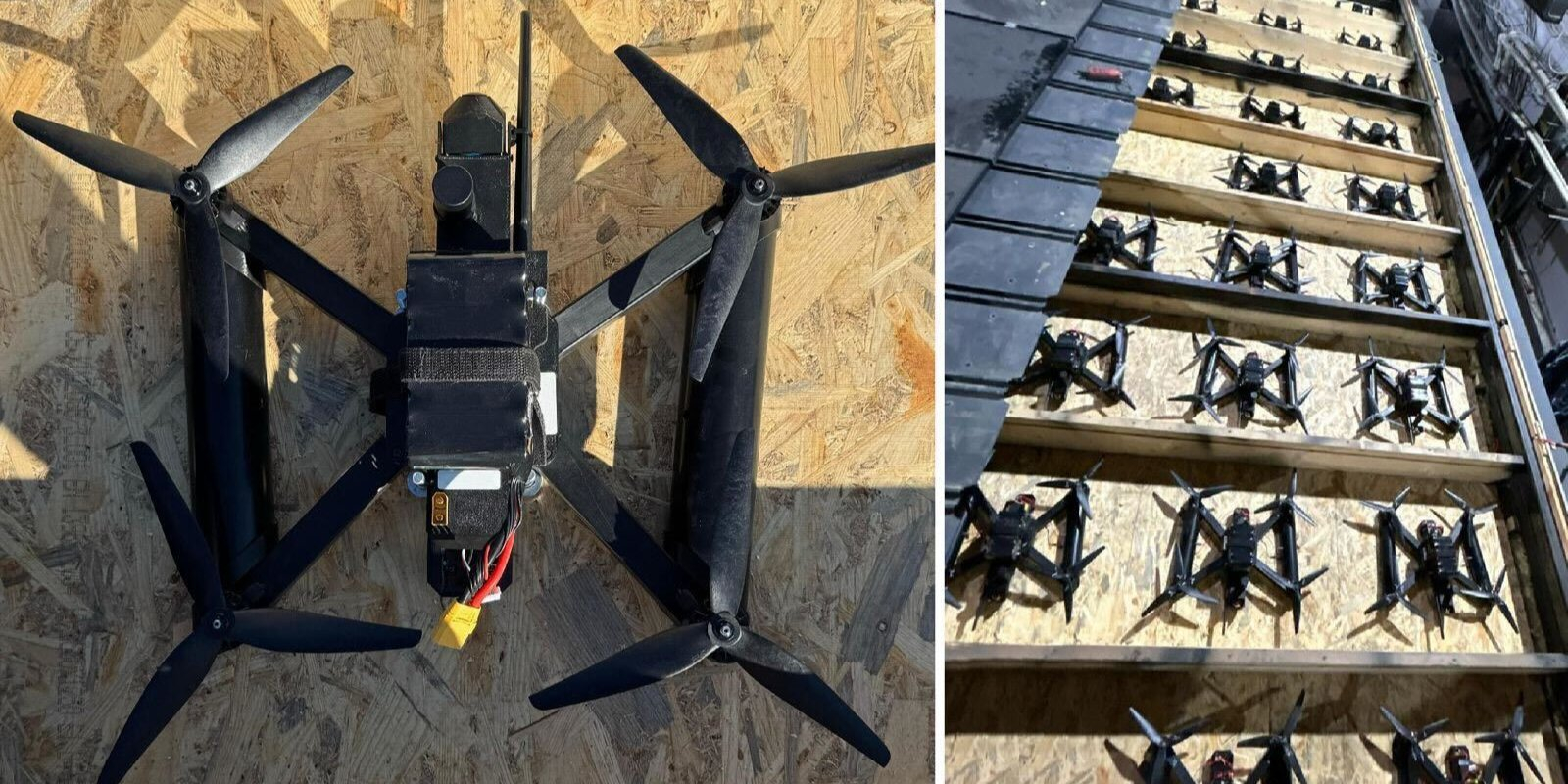
Sources told NV the operation took 18 months to plan. The SBU smuggled FPV drones into Russia in advance, followed by mobile wooden cabins, where the drones were hidden beneath remotely controlled rooftops. At the chosen time, the hatches were opened remotely and the drones launched from trucks inside Russia.
The strike came after a series of brutal Russian attacks on civilians and amid US efforts to mediate so-called “peace talks” between Ukraine and Russia.
On June 10, US Defense Secretary Pete Hegseth called Cobweb operation “bold” and confirmed that it was carried out without Pentagon consultation.
The military war may be swinging in our favor, but the information war continues.
Just as an army needs soldiers, so does a free society need its journalists to ensure that people have access to honest, trustworthy voices to understand the world around them.
For the past five years, The New Voice of Ukraine has been working tirelessly to push back against Russian narratives and defend democracy. But we cannot do it alone.
Please consider supporting us on Patreon for just $5 a month – your donation does directly to supporting journalists and ensuring that this front of the infowar says solid and defended.
Thank you.
Follow us on Twitter, Facebook and Google News
